appwars logo

Best Data Science Course in Noida with AI

Our data science course in Noida that covers AI, machine learning, and Python from scratch. Real projects, expert trainers, and 100% job assistance.

Certification Partners

Official

Our Students Placed In These Companies

Data Science with AI Course Syllabus

ADVANCE PYTHON PROGRAMMING

1. introduction to python

  • Simple
  • Open Source
  • High Level Programming
  • Portable
  • Object and Procedure Oriented
  • Easy to Maintain

2. Input and Output Functions

  • The Input) function
  • The print) function

n use of % percent operator

n use of format()

3. Variable and Data Types

  • What is a Variable
  • Assign Values to variable
  • Typecasting
  • Data Types in Python

n Numeric

n String

n Boolean

n Compound

n List

n Tuple

n Set

n FrozenSet

n Dictionary

4. Operators in Python

  • Types of Operators

n Arithmetic Operators

n Comparison Operators

n Assignment Operators

n Logical Operators

n Bitwise Operators

n Identity Operators

n Membership Operators

n Operators Associativity

n Operator Precedence

n BEDMAS

5. Conditional Statements in Python

  • The if Statement
  • if- else statement
  • The elif Statement
  • Nested if-else ladder

6. Loops in Python

  • use of while loop 
  • use of for loop 
  • range) function
  • arange) function
  • The break Statement
  • The continue Statement
  • The pass statement

7. User defined functions in python

  • Define a function
  • calling a function
  • Types of function
  • UDF 
  • Function Arguments 
  • Functions Parameters 
  • Anonymous Function
  • Global and Local Variable
  • lambda
  • Map
  • Reduce
  • filter 
  • Mathematical Function 
  • Trigonometric Function 
  • Random Function 

8. Strings in python

  • Creating strings
  • difference between “” &”
  • creating multiline comment
  • basic string operations
  • creating slices in strings
  • String Built-in Functions
  • n capitalize()
  • n upper() 
  • n lower()
  • n isalnum()
  • n isalpha()
  • n isnumeric()
  • n isdecimal()
  • n islower()
  • n isupper()

9. List

  • Access List items
  • Change List items
  • Add List Items
  • Remove List Items
  • Loop List
  • List Comprehension
  • SortList 
  • Copy List 
  • Join List 
  • List built-in Method
  • n append()
  • n count()
  • n extend()
  • n reverse()
  • n sort() 

10. Tuple

  • Access Tuples
  • Update Tuples
  • UnpackTuples
  • LoopTuple
  • JoinTuples
  • Tuplebuilt-in Methods
  • n index)
  • n count0

11. Sets

  • Create Sets 
  • Access Set items 
  • Add Set items
  • Remove Set items
  • Loop Sets
  • Join Sets

12. Dictionaries

  • Create Dictionaries 
  • Access Dictionary item 
  • Change Dictionary items
  • Add Dictionary items
  • Remove Dictionary items
  • Loop Dictionaries
  • Copy Dictionaries
  • Nested Dictionaries
  • Dictionary built-in Method
  • n keys()
  • n values()
  • n items()
  • n get()

13. Python Modules

  • Date Module
  • Time Module
  • os Module
  • The import statement
  • The from…import Statement

14. File Handling in Python

  • Readfiles
  • Write/ Create files
  • Delete files
  • Rename files

15. Exception Handling

  • Error in Python Program
  • Syntax error 
  • Exception
  • Types of Excepti 
  • Handling Exception in Python
  • Raising Exception
  • User Defined Exception

16. Regular Expression

  • Match function
  • Search function
  • Matching VS Searching
  • Modifiers
  • Patterns

ITERATORS- GENERATORS

Object Oriented Programming

  • Class 
  • Object 
  • Inheritance
  • Polymorphism
  • Overloading
  • Overriding
  • Abstraction
  • Encapsulation
  • Web scraping

STRUCTURE QUERY LANGUAGE (SQL)

1. MySQL

  • Introduction 
  • MySQL Data Types 
  • Creating Databases in MySQL
  • Some Useful Operations on MySQL Databases
  • CreatingTables in MYSQL
  • MYSQL Table Commands
  • Using ALTER command in MySQL
  • Using DESCRIBE in MYSQL
  • Using TRUNCATE in MySQL
  • Using DROP in MySQL
  • ALTER Command in MySQL
  • Sample Queries in MySQL
  • Constraints in MySQL
  • Using INSERT command in MySQL
  • Using UPDATE command in MySQL
  • Using DELETE command in MySQL
  • SELECT Queries in MySQL
  • Using REPLACE command in MySQL
  • JOINS in MySQL
  • RIGHT JOINS in MySQL 
  • LEFT JOINS in MySQL
  • INNER JOINS in MySQL
  • LEFTJOINS vs RIGHTJOIN in MySQL
  • Primary Keys in MySQL
  • FOREIGN KEYS in MySQL

2. Jupyter Overview

  • Updates to Notebook Zip
  • Jupyter Notebooks
  • Use of Google Colab

3. Git & GitHub

  • GitHub Introduction
  • GitHub Edit Core
  • Pull from GitHub
  • Push to GitHub
  • GitHub Branch

PYTHON AND DATA SCIENCE LIBRARY

1. NumPy

  • Creating arrays 
  • Array  indexing
  • Array slicing
  • Numpy Data Types
  • Copy vs View
  • Array Shape
  • Array reshape
  • Iterating
  • Join
  • Search
  • Filter
  • Split
  • Sort

2. Pandas

  • Pandas Series
  • Pandas Data Frame 
  • ReadCSV
  • ReadJSON
  • Cleaning Data
  • Missing Value Handling 
  • Optimizing Data Format 
  • Redundancy Minimization
  • The corr) function
  • Plotting Graphs in pandas

3. Matplotlib

  • Welcome to the Data Visualization Section
  • Introduction to Matplotlib
  • Matplotlib Part 1
  • Matplotlib Part 2
  • Matplotlib Part 3

4. Seaborn

  • Introduction to Seaborn
  • Distribution Plots
  • Categorical Plots
  • Matrix Plots
  • Grids
  • Regression Plots
  • Style and Color

STATISTICAL METHODS FOR DECISION MAKING

  • Probability distribution 
  • Normal distribution 
  • Poison’s distribution 
  • Descriptive Statistics 
  • Inferential Statistics 
  • Bayes’ theorem 
  • Central limit theorem 
  • Hypothesis testing
  • One Sample T-Test
  • Anova and Chi-Square

MACHINE LEARNING

1. Introduction to Machine Learning

  • Introduction to Machine Learning 
  • Importance Of Machine Learning
  • How did Machine Learning work?
  • Relationship Between Artificial Intelligence, Machine Learning, and Data Science
  • Different Categories of Machine Learning: Supervised, Unsupervised and Reinforcement
  • Applications of Machine Learning

2. Supervised Machine Learning

  • Linear Regression
  • Simple Linear Regression
  • Multiple Linear Regression
  • Performance Metrics: Accuracy Scores, R^2 And Adjusted RA2
  • To Compare the Model with Different Numbers of Independent Variables.
  • Approaches to Feature Selection: Univariate Selection, Feature Importance, RFE
  • Parameter Tuning and Model Evaluation
  • Data Transformation and Normalization
  • Ridge & Lasso Regression (L1 & L2)

3. Logistic Regression

  • Concept of Logistic Regression
  • Univariate Logistic Regression
  • Multivariate Logistic Regression: Model Building anp Evaluation
  • Dealing with Categorical Independent Variable – Hot Encoding Vs Dummy Variable

4. Decision Trees

  • Concept of Decision Trees
  • Importance and Usage of Ginny And Entropy
  • Information Gain
  • Visualizing Decision Trees Nodes and Splits
  • Working of The Decision Tree Algorithm
  • Extending Decision Trees to Regressing Problem
  • Evaluating Decision Trees Models: Accuracy, Precision, Recall, Confusion Matrix

5. Classification – k Nearest Neighbor (KNN)

  • Classification and Regression
  • Application, Advantages and Disadvantages
  • Distance Metric – Euclidean, Manhattan, Chebyshev, Minkow
  • Measuring accuracy using Cross-Validation, Stratified k-fold, Confusion Matrix,Precision, Recall, Fl-score.

6. Naive Bayes Classifier

  • The Bayes Theorem
  • The Gaussian Naïve’s Bayes Classifier – Assumptions of The Naïve Bayes Classifier,  Functioning of The Naïve’s Bayes Algorithm

7. Classification SVM (Support Vector Machine)

  • Classification and Regression
  • Separating line, Margin and Support Vectors 
  • Linear SVC Classification 
  • Polynomial Kernel – Kernel Trick
  • Gaussian Radial Basis Function (RBF)
  • Grid Search to tune hyper-parameters
  • Support Vector Regression

8. Unsupervised Learning – Clustering

  • Introduction to Clustering
  • K-Means Clustering: Linkage
  • Use of Elbow Curve & Silhouette Score
  • Hierarchical Clustering – Agglomerative & Divisive
  • Distance Matrix, Dendrogram

9. Density based clustering

  • DBSCAN (Density based clustering) Technique 
  • Density based clustering
  • Eps: Density
  • Core, Border and Noise points
  • Density edge and Density connected points
  • DBSCAN Algorithm
  • Hyper Parameters: MinPts and EpsA
  • Advantages and Limitations of DBSCAN

10. Principal Component Analysis – PCА

  • Noise in The Data and Dimensionality Reduction
  • Capturing Variance – The Concept of Principal
  • Components
  • Assumptions in Using PCA
  • Eigenvectors and Orthogonality of Principal Components
  • What Is the Complexity Curve?
  • Advantages of Using PCA
  • The Working of The PCA Algorithm
  • Singular Value Decomposition

11. Ensemble Modelling

  • Popular Ensembles
  • Bagging
  • Bootstrap
  • Introduction to Random Forests
  • Feature Importance in Random Forests
  • Boosting
  • How Boosting Algorithm Works?
  • Adaboost 
  • Gradient Boost
  • XGBoost

DEEP LEARNING

1. Introduction to Deep Learning

  • What is Deep Learning?
  • Why Deep Learning?
  • Relationship Between Al, Machine Learning, and Deep Learning
  • History and Evolution of Deep Learning
  • Challenges Motivating Deep Learning
  • Key Applications of Deep Learning

2. Artificial Neural Networks (ANN

  • Importance of ANN in Al & Machine Learning
  • Biological Inspiration: How ANN Mimics the Human Br
  • Input Layer: Receiving raw data
  • Hidden Layers: Processing and feature extraction
  • Output Layer: Generating predictions
  • Activation Functions: ReLU, Sigmoid, Tanh, Softmax
  • Training and Optimization in ANN
  • Forward and Backpropagation
  • Loss Functions in ANN (MSE, Cross-Entropy)
  • Gradient Descent & Optimization Algorithms (SGD, Adam, RMSprop)HNOLOGIES
  • Overfitting & Regularization (Dropout, Batch Normalization)
  • Applications of ANN Pt Consultancy
  • Image & Speech Recognition
  • Natural Language Processing (NLP)
  • Financial Market Forecasting
  • Healthcare & Disease Prediction
  • Implementing ANN in Python 
  • Using TensorFlow & Keras 
  • Building & Training an ANN Model
  • Evaluating Model Performance

3. Convolutional Neural Networks (CNN)

  • What is a CNN?
  • Why CNNs for Image Processing?
  • How CNNs Differ from Traditional Neural Networks
  • Architecture of CNN
  • Convolutional Layer: Feature extraction
  • Pooling Layer: Dimensionality reduction (Max Pooling, Average
  • Pooling)
  • Fully Connected Layer: Classification and output
  • Activation Functions: ReLU, Softmax
  • Types of CNN Architectures
  • LeNet-5 – Early CNN model
  • AlexNet – Breakthrough in deep learning
  • VGGNet – Deeper architectures
  • ResNet – Solving vanishing gradient problem
  • InceptionNet – Multi-scale feature learning
  • Training a CNN
  • Data Augmentation for Better Performance
  • Loss Functions for CNN (Categorical Cross-Entropy, MSE)
  • Optimization Techniques (Adam, SGD)
  • Applications of CNN
  • Image Classification: Face Recognition, Object Detection
  • Medical Image Analysis: Disease Detection (X-rays, MRIs)
  • Autonomous Vehicles: Lane detection, Pedestrian recognition
  • Augmented Reality & Deepfake Technology
  • Implementing CNN in Python
  • Using TensorFlow & Keras
  • Building a CNN Model for Image Classification

4. Recurrent Neural Networks (RNN)

  • What is an RNN?
  • Why RNNs for Sequential Data?
  • Difference Between RNN and Traditional Neural Networks
  • Architecture of RNN
  • Input, Hidden, and Output Layers
  • Recurrent Connections: Handling time-series & sequential data
  • Backpropagation Through Time (BPTT)
  • Types of RNN Architectures
  • Basic RNN – Simple recurrent structure
  • Long Short-Term Memory (LSTM) – Solving the vanishing gradient problem
  • Gated Recurrent Unit (GRU) – Efficient alternative to LSTM
  • Bidirectional RNN (Bi-RNN) – Learning from past and future
  • context
  • Applications of RNN

5. Natural Language Processing (NLP) with Deep Learning

  • Introduction to NLP 
  • What is Natural Language Processing? 
  • Importance of NLP in Al 
  • Key NLP Concepts 
  • Tokenization, Stemming, and Lemmatization
  • Stopwords & Named Entity Recognition (NER)
  • POS Tagging & Chunking
  • Bag of Words (BoW) & TF-IDF
  • Deep Learning for NLP
  • Word Embeddings (Word2Vec, GloVe, FastText)
  • Recurrent Neural Networks (RNNs) for NLP
  • Transformers & BERT for NLP
  • Attention Mechanisms in NLP
  • Applications of NLP
  • Chatbots & Virtual Assistants
  • Text Classification & Sentiment Analysis
  • Speech-to-Text & Text-to-Speech Conversion
  • Implementing NLP Models
  • Using NLTK, Spacy, TensorFlow, and Transformers
  • Sentiment Analysis & Text Generation

6. Deep Learning with Autoencoders

  • What are Autoencoders?
  • Importance in Deep Learning
  • Applications of Autoencoders
  • Architecture of Autoencoders
  • Encoder: Extracting meaningful features
  • Latent Space: Compact representation
  • Decoder: Reconstructing the original data
  • Types of Autoencoders
  • Vanilla Autoencoder: Basic architecture
  • Denoising Autoencoder: Removing noise from data
  • Sparse Autoencoder: Learning useful representations
  • Variational Autoencoder (VAE): Generative modeling
  • Convolutional Autoencoder (CAE): Image processing applications 
  • Applications of Autoencoders 
  • Data Compression & Feature Extraction
  • Anomaly Detection
  • Image Denoising
  • Generative Modeling
  • Implementing Autoencoders in Python
  • Using TensorFlow & Keras

7. Computer Vision with Deep Learning

  • What is Computer Vision?
  • The Evolution of Computer Vision
  • Importance and Real-World Applications
  • Key Concepts in Computer Vision
  • Image Processing vs. Computer Vision
  • Understanding Pixels and Image Representation
  • Feature Extraction and Object Recognition
  • Techniques in Computer Vision
  • Image Processing: Filters, Edge Detection, Histogram
  • Equalization
  • Feature Detection & Matching: SIFT, SURF, ORB
  • Object Detection: YOLO, SSD, Faster R-CNN
  • Image Segmentation: Semantic & Instance Segmentation
  • Deep Learning in Computer Vision
  • Role of Convolutional Neural Networks (CNNs)
  • Transfer Learning for Computer Vision
  • Generative Adversarial Networks (GANs) for Image Generation
  • Autoencoders for Image Compression
  • Applications of Computer Vision
  • Healthcare: Medical Image Analysis (X-rays, MRIs)
  • Autonomous Vehicles: Object Detection & Lane Detection
  • Security: Facial Recognition & Surveillance
  • Implementing Computer Vision in Python
  • OpenCV for Image Processing 
  • Real-time Object Detection with YOLO 

ARTIFICIAL INTELLIGENCE

  • Introduction to Generative Al
  • What is Generative Al & How it Works?
  • Key Features of GenAl
  • Introduction to Large Language Models (LLMs)
  • What are LLMs?
  • How LLMs Work? (Transformers, Self-Attention Mechanism)
  • Popular LLMs & Their Applications
  • GPT (ChatGPT), BERT, LLaMA, Claude
  • Applications in Chatbots, Content Generation, Code Assistance, Al Art
  • Future of Generative AI & LLMs
  • Al Ethics & Responsible Al
  • Challenges & Advancements in LLMs 

PROPOSED PROJECTS

1. Python

  • Snake Game 
  • Simple Calculator 
  • Typing Speed Test 
  • Memory Puzzle 
  • Password Generator 
  • Currency Converte 
  • Count down Clock and Timer 

2. Machine Learning

  • Iris Flowers Classification
  • Cartoonify Image
  • Loan Default Prediction
  • RealEstate Price Prediction
  • Stock Price Prediction
  • Titanic Survival Classification
  • Twitter Sentiment Analysis by tweepy

3. Deep Learning

  • Human Face Detection 
  • Image Classification with CIFAR-10
  • Breast Cancer Classification
  • Music Genre Classification
  • Chat bot using Deep Learning
  • Image Caption Generation
  • Coloring Old B&W Images

4. Data Science

  • Fake News Detection 
  • Color Detection using open CV 
  • Gender and Age Detection(CNN)
  • Uber Data Analysis
  • Credit Card Fraud Detection
  • Movie Recommender System

5. Artificial Intelligence

  • LaneLine Detection Project Code
  • Image Classification
  • Blur the Face
  • Create your own emoji with Python

ADVANCE PYTHON PROGRAMMING

1. introduction to python

  • Simple
  • Open Source
  • High Level Programming
  • Portable
  • Object and Procedure Oriented
  • Easy to Maintain

2. Input and Output Functions

  • The Input) function
  • The print) function

n use of % percent operator

n use of format()

3. Variable and Data Types

  • What is a Variable
  • Assign Values to variable
  • Typecasting
  • Data Types in Python

n Numeric

n String

n Boolean

n Compound

n List

n Tuple

n Set

n FrozenSet

n Dictionary

4. Operators in Python

  • Types of Operators

n Arithmetic Operators

n Comparison Operators

n Assignment Operators

n Logical Operators

n Bitwise Operators

n Identity Operators

n Membership Operators

n Operators Associativity

n Operator Precedence

n BEDMAS

5. Conditional Statements in Python

  • The if Statement
  • if- else statement
  • The elif Statement
  • Nested if-else ladder

6. Loops in Python

  • use of while loop 
  • use of for loop 
  • range) function
  • arange) function
  • The break Statement
  • The continue Statement
  • The pass statement

7. User defined functions in python

  • Define a function
  • calling a function
  • Types of function
  • UDF 
  • Function Arguments 
  • Functions Parameters 
  • Anonymous Function
  • Global and Local Variable
  • lambda
  • Map
  • Reduce
  • filter 
  • Mathematical Function 
  • Trigonometric Function 
  • Random Function 

8. Strings in python

  • Creating strings
  • difference between “” &”
  • creating multiline comment
  • basic string operations
  • creating slices in strings
  • String Built-in Functions
  • n capitalize()
  • n upper() 
  • n lower()
  • n isalnum()
  • n isalpha()
  • n isnumeric()
  • n isdecimal()
  • n islower()
  • n isupper()

9. List

  • Access List items
  • Change List items
  • Add List Items
  • Remove List Items
  • Loop List
  • List Comprehension
  • SortList 
  • Copy List 
  • Join List 
  • List built-in Method
  • n append()
  • n count()
  • n extend()
  • n reverse()
  • n sort() 

10. Tuple

  • Access Tuples
  • Update Tuples
  • UnpackTuples
  • LoopTuple
  • JoinTuples
  • Tuplebuilt-in Methods
  • n index)
  • n count0

11. Sets

  • Create Sets 
  • Access Set items 
  • Add Set items
  • Remove Set items
  • Loop Sets
  • Join Sets

12. Dictionaries

  • Create Dictionaries 
  • Access Dictionary item 
  • Change Dictionary items
  • Add Dictionary items
  • Remove Dictionary items
  • Loop Dictionaries
  • Copy Dictionaries
  • Nested Dictionaries
  • Dictionary built-in Method
  • n keys()
  • n values()
  • n items()
  • n get()

13. Python Modules

  • Date Module
  • Time Module
  • os Module
  • The import statement
  • The from…import Statement

14. File Handling in Python

  • Readfiles
  • Write/ Create files
  • Delete files
  • Rename files

15. Exception Handling

  • Error in Python Program
  • Syntax error 
  • Exception
  • Types of Excepti 
  • Handling Exception in Python
  • Raising Exception
  • User Defined Exception

16. Regular Expression

  • Match function
  • Search function
  • Matching VS Searching
  • Modifiers
  • Patterns

ITERATORS- GENERATORS

Object Oriented Programming

  • Class 
  • Object 
  • Inheritance
  • Polymorphism
  • Overloading
  • Overriding
  • Abstraction
  • Encapsulation
  • Web scraping

STRUCTURE QUERY LANGUAGE (SQL)

1. MySQL

  • Introduction 
  • MySQL Data Types 
  • Creating Databases in MySQL
  • Some Useful Operations on MySQL Databases
  • CreatingTables in MYSQL
  • MYSQL Table Commands
  • Using ALTER command in MySQL
  • Using DESCRIBE in MYSQL
  • Using TRUNCATE in MySQL
  • Using DROP in MySQL
  • ALTER Command in MySQL
  • Sample Queries in MySQL
  • Constraints in MySQL
  • Using INSERT command in MySQL
  • Using UPDATE command in MySQL
  • Using DELETE command in MySQL
  • SELECT Queries in MySQL
  • Using REPLACE command in MySQL
  • JOINS in MySQL
  • RIGHT JOINS in MySQL 
  • LEFT JOINS in MySQL
  • INNER JOINS in MySQL
  • LEFTJOINS vs RIGHTJOIN in MySQL
  • Primary Keys in MySQL
  • FOREIGN KEYS in MySQL

2. Jupyter Overview

  • Updates to Notebook Zip
  • Jupyter Notebooks
  • Use of Google Colab

3. Git & GitHub

  • GitHub Introduction
  • GitHub Edit Core
  • Pull from GitHub
  • Push to GitHub
  • GitHub Branch

PYTHON AND DATA SCIENCE LIBRARY

1. NumPy

  • Creating arrays 
  • Array  indexing
  • Array slicing
  • Numpy Data Types
  • Copy vs View
  • Array Shape
  • Array reshape
  • Iterating
  • Join
  • Search
  • Filter
  • Split
  • Sort

2. Pandas

  • Pandas Series
  • Pandas Data Frame 
  • ReadCSV
  • ReadJSON
  • Cleaning Data
  • Missing Value Handling 
  • Optimizing Data Format 
  • Redundancy Minimization
  • The corr) function
  • Plotting Graphs in pandas

3. Matplotlib

  • Welcome to the Data Visualization Section
  • Introduction to Matplotlib
  • Matplotlib Part 1
  • Matplotlib Part 2
  • Matplotlib Part 3

4. Seaborn

  • Introduction to Seaborn
  • Distribution Plots
  • Categorical Plots
  • Matrix Plots
  • Grids
  • Regression Plots
  • Style and Color

STATISTICAL METHODS FOR DECISION MAKING

  • Probability distribution 
  • Normal distribution 
  • Poison’s distribution 
  • Descriptive Statistics 
  • Inferential Statistics 
  • Bayes’ theorem 
  • Central limit theorem 
  • Hypothesis testing
  • One Sample T-Test
  • Anova and Chi-Square

MACHINE LEARNING

1. Introduction to Machine Learning

  • Introduction to Machine Learning 
  • Importance Of Machine Learning
  • How did Machine Learning work?
  • Relationship Between Artificial Intelligence, Machine Learning, and Data Science
  • Different Categories of Machine Learning: Supervised, Unsupervised and Reinforcement
  • Applications of Machine Learning

2. Supervised Machine Learning

  • Linear Regression
  • Simple Linear Regression
  • Multiple Linear Regression
  • Performance Metrics: Accuracy Scores, R^2 And Adjusted RA2
  • To Compare the Model with Different Numbers of Independent Variables.
  • Approaches to Feature Selection: Univariate Selection, Feature Importance, RFE
  • Parameter Tuning and Model Evaluation
  • Data Transformation and Normalization
  • Ridge & Lasso Regression (L1 & L2)

3. Logistic Regression

  • Concept of Logistic Regression
  • Univariate Logistic Regression
  • Multivariate Logistic Regression: Model Building anp Evaluation
  • Dealing with Categorical Independent Variable – Hot Encoding Vs Dummy Variable

4. Decision Trees

  • Concept of Decision Trees
  • Importance and Usage of Ginny And Entropy
  • Information Gain
  • Visualizing Decision Trees Nodes and Splits
  • Working of The Decision Tree Algorithm
  • Extending Decision Trees to Regressing Problem
  • Evaluating Decision Trees Models: Accuracy, Precision, Recall, Confusion Matrix

5. Classification – k Nearest Neighbor (KNN)

  • Classification and Regression
  • Application, Advantages and Disadvantages
  • Distance Metric – Euclidean, Manhattan, Chebyshev, Minkow
  • Measuring accuracy using Cross-Validation, Stratified k-fold, Confusion Matrix,Precision, Recall, Fl-score.

6. Naive Bayes Classifier

  • The Bayes Theorem
  • The Gaussian Naïve’s Bayes Classifier – Assumptions of The Naïve Bayes Classifier,  Functioning of The Naïve’s Bayes Algorithm

7. Classification SVM (Support Vector Machine)

  • Classification and Regression
  • Separating line, Margin and Support Vectors 
  • Linear SVC Classification 
  • Polynomial Kernel – Kernel Trick
  • Gaussian Radial Basis Function (RBF)
  • Grid Search to tune hyper-parameters
  • Support Vector Regression

8. Unsupervised Learning – Clustering

  • Introduction to Clustering
  • K-Means Clustering: Linkage
  • Use of Elbow Curve & Silhouette Score
  • Hierarchical Clustering – Agglomerative & Divisive
  • Distance Matrix, Dendrogram

9. Density based clustering

  • DBSCAN (Density based clustering) Technique 
  • Density based clustering
  • Eps: Density
  • Core, Border and Noise points
  • Density edge and Density connected points
  • DBSCAN Algorithm
  • Hyper Parameters: MinPts and EpsA
  • Advantages and Limitations of DBSCAN

10. Principal Component Analysis – PCА

  • Noise in The Data and Dimensionality Reduction
  • Capturing Variance – The Concept of Principal
  • Components
  • Assumptions in Using PCA
  • Eigenvectors and Orthogonality of Principal Components
  • What Is the Complexity Curve?
  • Advantages of Using PCA
  • The Working of The PCA Algorithm
  • Singular Value Decomposition

11. Ensemble Modelling

  • Popular Ensembles
  • Bagging
  • Bootstrap
  • Introduction to Random Forests
  • Feature Importance in Random Forests
  • Boosting
  • How Boosting Algorithm Works?
  • Adaboost 
  • Gradient Boost
  • XGBoost

DEEP LEARNING

1. Introduction to Deep Learning

  • What is Deep Learning?
  • Why Deep Learning?
  • Relationship Between Al, Machine Learning, and Deep Learning
  • History and Evolution of Deep Learning
  • Challenges Motivating Deep Learning
  • Key Applications of Deep Learning

2. Artificial Neural Networks (ANN

  • Importance of ANN in Al & Machine Learning
  • Biological Inspiration: How ANN Mimics the Human Br
  • Input Layer: Receiving raw data
  • Hidden Layers: Processing and feature extraction
  • Output Layer: Generating predictions
  • Activation Functions: ReLU, Sigmoid, Tanh, Softmax
  • Training and Optimization in ANN
  • Forward and Backpropagation
  • Loss Functions in ANN (MSE, Cross-Entropy)
  • Gradient Descent & Optimization Algorithms (SGD, Adam, RMSprop)HNOLOGIES
  • Overfitting & Regularization (Dropout, Batch Normalization)
  • Applications of ANN Pt Consultancy
  • Image & Speech Recognition
  • Natural Language Processing (NLP)
  • Financial Market Forecasting
  • Healthcare & Disease Prediction
  • Implementing ANN in Python 
  • Using TensorFlow & Keras 
  • Building & Training an ANN Model
  • Evaluating Model Performance

3. Convolutional Neural Networks (CNN)

  • What is a CNN?
  • Why CNNs for Image Processing?
  • How CNNs Differ from Traditional Neural Networks
  • Architecture of CNN
  • Convolutional Layer: Feature extraction
  • Pooling Layer: Dimensionality reduction (Max Pooling, Average
  • Pooling)
  • Fully Connected Layer: Classification and output
  • Activation Functions: ReLU, Softmax
  • Types of CNN Architectures
  • LeNet-5 – Early CNN model
  • AlexNet – Breakthrough in deep learning
  • VGGNet – Deeper architectures
  • ResNet – Solving vanishing gradient problem
  • InceptionNet – Multi-scale feature learning
  • Training a CNN
  • Data Augmentation for Better Performance
  • Loss Functions for CNN (Categorical Cross-Entropy, MSE)
  • Optimization Techniques (Adam, SGD)
  • Applications of CNN
  • Image Classification: Face Recognition, Object Detection
  • Medical Image Analysis: Disease Detection (X-rays, MRIs)
  • Autonomous Vehicles: Lane detection, Pedestrian recognition
  • Augmented Reality & Deepfake Technology
  • Implementing CNN in Python
  • Using TensorFlow & Keras
  • Building a CNN Model for Image Classification

4. Recurrent Neural Networks (RNN)

  • What is an RNN?
  • Why RNNs for Sequential Data?
  • Difference Between RNN and Traditional Neural Networks
  • Architecture of RNN
  • Input, Hidden, and Output Layers
  • Recurrent Connections: Handling time-series & sequential data
  • Backpropagation Through Time (BPTT)
  • Types of RNN Architectures
  • Basic RNN – Simple recurrent structure
  • Long Short-Term Memory (LSTM) – Solving the vanishing gradient problem
  • Gated Recurrent Unit (GRU) – Efficient alternative to LSTM
  • Bidirectional RNN (Bi-RNN) – Learning from past and future
  • context
  • Applications of RNN

5. Natural Language Processing (NLP) with Deep Learning

  • Introduction to NLP 
  • What is Natural Language Processing? 
  • Importance of NLP in Al 
  • Key NLP Concepts 
  • Tokenization, Stemming, and Lemmatization
  • Stopwords & Named Entity Recognition (NER)
  • POS Tagging & Chunking
  • Bag of Words (BoW) & TF-IDF
  • Deep Learning for NLP
  • Word Embeddings (Word2Vec, GloVe, FastText)
  • Recurrent Neural Networks (RNNs) for NLP
  • Transformers & BERT for NLP
  • Attention Mechanisms in NLP
  • Applications of NLP
  • Chatbots & Virtual Assistants
  • Text Classification & Sentiment Analysis
  • Speech-to-Text & Text-to-Speech Conversion
  • Implementing NLP Models
  • Using NLTK, Spacy, TensorFlow, and Transformers
  • Sentiment Analysis & Text Generation

6. Deep Learning with Autoencoders

  • What are Autoencoders?
  • Importance in Deep Learning
  • Applications of Autoencoders
  • Architecture of Autoencoders
  • Encoder: Extracting meaningful features
  • Latent Space: Compact representation
  • Decoder: Reconstructing the original data
  • Types of Autoencoders
  • Vanilla Autoencoder: Basic architecture
  • Denoising Autoencoder: Removing noise from data
  • Sparse Autoencoder: Learning useful representations
  • Variational Autoencoder (VAE): Generative modeling
  • Convolutional Autoencoder (CAE): Image processing applications 
  • Applications of Autoencoders 
  • Data Compression & Feature Extraction
  • Anomaly Detection
  • Image Denoising
  • Generative Modeling
  • Implementing Autoencoders in Python
  • Using TensorFlow & Keras

7. Computer Vision with Deep Learning

  • What is Computer Vision?
  • The Evolution of Computer Vision
  • Importance and Real-World Applications
  • Key Concepts in Computer Vision
  • Image Processing vs. Computer Vision
  • Understanding Pixels and Image Representation
  • Feature Extraction and Object Recognition
  • Techniques in Computer Vision
  • Image Processing: Filters, Edge Detection, Histogram
  • Equalization
  • Feature Detection & Matching: SIFT, SURF, ORB
  • Object Detection: YOLO, SSD, Faster R-CNN
  • Image Segmentation: Semantic & Instance Segmentation
  • Deep Learning in Computer Vision
  • Role of Convolutional Neural Networks (CNNs)
  • Transfer Learning for Computer Vision
  • Generative Adversarial Networks (GANs) for Image Generation
  • Autoencoders for Image Compression
  • Applications of Computer Vision
  • Healthcare: Medical Image Analysis (X-rays, MRIs)
  • Autonomous Vehicles: Object Detection & Lane Detection
  • Security: Facial Recognition & Surveillance
  • Implementing Computer Vision in Python
  • OpenCV for Image Processing 
  • Real-time Object Detection with YOLO 

ARTIFICIAL INTELLIGENCE

  • Introduction to Generative Al
  • What is Generative Al & How it Works?
  • Key Features of GenAl
  • Introduction to Large Language Models (LLMs)
  • What are LLMs?
  • How LLMs Work? (Transformers, Self-Attention Mechanism)
  • Popular LLMs & Their Applications
  • GPT (ChatGPT), BERT, LLaMA, Claude
  • Applications in Chatbots, Content Generation, Code Assistance, Al Art
  • Future of Generative AI & LLMs
  • Al Ethics & Responsible Al
  • Challenges & Advancements in LLMs 

CURSOR AI + TRAE AI

Module 1: Introduction to Modern Al Tools

  • What is Al-first Development? 
  • Evolution of Al Coding Assistants 
  • Overview of CURSOR AI & TRAE AI 
  • How developers use these tools in real-world projects

Module 2: Getting Started with CURSOR AI 

Installation & Setup
  • Installing Cursor Editor
  • Integrating GitHub/GitLab
  • Setting environment, extensions & APIs
Understanding Key CURSOR Features
  • Smart Al Pair Programming
  • Code Autocomplete & Refactoring
  • Al Chat for Code Explanations
  • Multi-file Project Understanding
  • Cursor Composer Mode
  • Auto debugging assistance
  • Using Cursor for test-case generation
Hands-on with CURSOR AI
  • Building your first Al-assisted program
  • Real-time code optimization
  • Converting requirements into working code
  • Fixing bugs with Al suggestions
  • Al-generated documentation

Module 3: Introduction to TRAE AI

What is TRAE (Track-Reason-Execute) AI?
  • TRAE architecture overview
  • How TRAE agents understand and break tasks
  • Difference between standard LLM vs TRAE-based systems
TRAE AI Capabilities
  • Task tracking & workflow automation
  • Multi-step reasoning
  • Agent collaboration
  • Automated execution with human oversight
TRAE Al Tools & Platforms
  • TRAE SDK basics
  • Agent Studio Platforms
  • Integration with APIs & external tools

Module 4: Building Al Agents Using TRAE

Agent Fundamentals
  • Agent roles & responsibilities
  • Reasoning graph
  • Memory handling
  • Decision-making flow
Hands-On Agent Development
  • Creating your first TRAE-based agent
  • Connecting agent with external APIs
  • Automating data extraction & reporting
  • Building a task automation pipeline
Real-World Applications
  • Chatbots & virtual assistants 
  • Automated customer service flows 
  • Sales & lead management automation
  • Content creation & research automation

Module 5: CURSOR + TRAE Integration

  • How CURSOR helps build TRAE agents
  • Auto-code workflows for Al automation
  • Full-stack agent development
  • Automating testing & deployment using Al

Module 6: Advanced Al Development Workflow

  • Mlti-agent systems
  • Prompt engineering for agents
  • Workflow design patterns
  • Long-term memory integration
  • Secure Al development principles

Module 7: Capstone Project

  • Al-powered chatbot 
  • Automated data analytics agent
  • Code generation assistant
  • Workflow automation system

Module 8: Career Path & Industry Demand

  • Jobs in Al Agent Development
  • Using CURSOR & TRAE skills in MNC interviews
  • Portfolio building 
  • Resume + GitHub project guidance
Enquiry Now

    Our Placed Students

    khushi
    Khushi Shaho

    Web Developer

    Placed at

    tcs
    6
    Jay Prakash

    Cyber Security Consultant

    Placed at

    Uttarakhand police
    9 1
    Shristi Kumari

    Software Developer

    Placed at

    cognizant
    mukul
    Mukul Chauhan

    Java Developer

    Placed at

    nagarro

    Skill & Tools That You will Learn

    excel

    Excel

    powe bi

    Power BI

    numpy

    Numpy

    pandas

    Pandas

    matplotlib

    Matplotlib

    seaborn

    Seaborn

    jupyter

    Jupyter

    julius

    Julius

    colab

    Colab

    claude

    Claude

    chatgpt

    ChatGPT

    tablue

    Tableau

    copilot

    Copilot

    scikit-learn

    Scikit learn

    postgresql

    Postgre SQL

    mysql

    My SQL

    pytorch

    Pytorch

    git hub

    GitHub

    plotly

    Plotly

    Tensor Flow

    Tensor Flow

    LangChain

    LangChain

    lightgbm

    LightGBM

    antigravity ai

    Antigravity

    cursor ai

    Cursor AI

    You Learn 30+ Data Science Skills

    • Data Collection
    • Data Cleaning
    • Data Wrangling
    • Data Preprocessing
    • Exploratory Data Analysis (EDA)
    • Statistical Analysis
    • Probability Analysis
    • Feature Engineering
    • Machine Learning
    • Supervised Learning
    • Unsupervised Learning
    • Deep Learning
    • Natural Language Processing (NLP)
    • Computer Vision
    • Predictive Modeling
    • Model Evaluation
    • Model Optimization
    • Time Series Analysis
    • Data Visualization
    • Data Interpretation
    • Data Mining
    • Pattern Recognition
    • Anomaly Detection
    • Predictive Analytics
    • Data Storytelling
    • Model Deployment
    • Problem Solving
    • Critical Thinking
    • Business Acumen
    • Data-Driven Decision Making

    Why Choose us?

    What is Data Science?

    Data science is the exciting field of extracting meaningful insights from raw data. It combines mathematics, statistics, programming, and artificial intelligence to solve real-world business problems and predict future trends.

    Anyone with a passion to learn! This includes college students (B.Tech, BCA, BBA, B.Sc), IT professionals looking to upskill, and non-IT professionals wanting to transition into the tech industry. It is a highly beginner-friendly program.

    Freshers who complete our data science course in Noida can expect starting salaries between ₹4 LPA to ₹8 LPA. Experienced professionals can easily command salaries ranging from ₹12 LPA to ₹25+ LPA, depending on their prior experience and skill level.

    You might be wondering, “Why should I invest my time in a data science course in Noida right now?”Here is exactly why you need to jump into this field immediately:

    1. The Massive AI Boom

    We are living in the golden age of Artificial Intelligence. Tools like ChatGPT, Gemini, and Midjourney have shown the world the power of data. However, AI cannot exist without data. Data scientists are the architects behind these AI systems. By taking our data science training in Noida, you position yourself at the very center of the global AI revolution.

    2. Unprecedented Demand for Data Scientists

    Every industry from healthcare and finance to e-commerce and digital marketing is generating mountains of data. Companies desperately need experts who can clean, analyze, and interpret this data. Because of this massive supply-demand gap, graduates from a reputable data science institute in Noida are hired almost instantly.

    3. High Salary Stats

    Let’s talk numbers. Data science remains one of the highest-paying jobs globally and in India. The average salary for a mid-level data scientist is soaring. By enrolling in the best data science training institute in Noida, you are essentially securing a high ROI (Return on Investment) for your education. It is not uncommon for our alumni to double or triple their previous salaries.

    4. Explosive Career Growth

    A job in data is not a dead-end street. Once you complete a data science course in Noida with placement, you start as an analyst or junior scientist. Within 2 to 3 years, you can quickly move up to Senior Data Scientist, Lead AI Engineer, or Chief Data Officer. The ladder goes all the way to the executive suite.

    5. Cross-Industry Demand

    Unlike some niche IT skills, data science is universal. Do you love sports? Sports teams hire data analysts. Love fashion? Retail brands need predictive modeling. By completing your data science training in Noida, you get the freedom to choose the industry you are most passionate about.

    Completing our data science course in Noida opens up a massive world of job profiles. You don’t just have to be a “data scientist” Here are the top career outcomes and realistic salary ranges in India you can expect:

    Data Scientist

    What they do: Use advanced statistics and machine learning to predict the future and solve complex business puzzles.

    Salary Range: ₹8,000,000 – ₹20,000,000+ per year.
    How we help: Our data science institute in Noida covers advanced ML algorithms to make you perfect for this role.

    Data Analyst

    What they do: Clean data, create visual dashboards, and help companies make day-to-day decisions.

    Salary Range: ₹4,000,000 – ₹10,000,000 per year.

    How we help: You will master data analytics using Power BI certification and Tableau during the course.

    Machine Learning (ML) Engineer

    What they do: Build, test, and deploy AI models into production environments.

    Salary Range: ₹10,000,000 – ₹25,000,000+ per year.

    How we help: Our machine learning training modules in Noida are heavily integrated into the core curriculum.

    Business Intelligence (BI) Analyst

    What they do: Focus on business strategy, creating reports that executives use to steer the company.

    Salary Range: ₹6,000,000 – ₹14,000,000 per year.

    How we help: Our data science course in Noida heavily emphasizes business problem-solving frameworks.

    AI Engineer

    What they do: Work with deep learning, neural networks, and NLP (natural language processing) to create intelligent systems.

    Salary Range: ₹12,000,000 – ₹30,000,000+ per year.

    How we help: We introduce you to deep learning architectures, building a b foundation for an AI course specialization.

    Data Engineer

    What they do: Build the infrastructure and pipelines that gather and store data safely.

    Salary Range: ₹9,000,000 – ₹22,000,000 per year.

    How we help: We teach you SQL and cloud basics to understand how data flows.

    Note: These salaries vary based on your background, but graduating from the best data science training institute in Noida gives you a massive advantage in negotiations.

    You have many options, so why should you pick Appwars Technologies? Simply put, we care about your success. We are not just a data science institute in Noida; we are your career partners. We provide a completely hands-on learning environment. You will write code, build models, and deploy apps from day one. Here is a quick comparison table showing why we are considered the best data science training institute in Noida:
    Feature Appwars Technologies Average Training Institutes
    Practical Approach 80% Practical, 20% Theory Mostly theoretical concepts
    Beginner Friendly Yes, absolutely! Basics to Advanced Expects prior coding knowledge
    Curriculum Updates Updated for AI demands Outdated syllabus
    Placement Guarantee Yes, dedicated placement cell Only “assistance” or no support
    Python Focus Extensive Python for Data Science Basic Python overview
    Live Projects 6+ Industry-level real projects 1 or 2 basic textbook projects

    When looking for a data science course in Noida with placement, this table clearly shows why students and working professionals trust Appwars Technologies.

    To become a top-tier data professional, you need to master the right tools. At Appwars Technologies, our data science course in Noida ensures you are highly proficient in the modern tech stack.

    Here is what you will master:

    • Python: The undisputed king of data. We dedicate extensive hours to Python for Data Science, ensuring you can write clean, efficient code. You can also explore our standalone Python course in Noida if you want to focus purely on programming first.
    • SQL: The language of databases. You will learn to extract and manipulate data from complex relational databases.
    • Excel: The classic tool that is still heavily used for quick analytics and data cleaning.
    • Power BI & Tableau: The best tools for data visualization. You will learn to create stunning dashboards. (Check out our Data Analytics Course in Noida and Tableau course in Noida for deeper insights).
    • Scikit-Learn, Pandas, NumPy: The holy trinity of Python for Data Science libraries.
    • TensorFlow & Keras: For deep learning and advanced neural networks.

    By mastering these tools at the best data science training institute in Noida, your resume will be irresistible to tech recruiters.

    Theory is good, but practice is what gets you hired. Companies don’t want to know what you read; they want to know what you have built. This is why our data science course in Noida with placement includes intense, real-world projects.

    These projects will go straight into your GitHub portfolio, proving your skills to future employers:

    1. Sales Forecasting

    The Problem: A major retail store wants to know how many products they will sell next month to manage their inventory.
    What you will do: You will use Python for data science and time series analysis to predict future sales based on historical data, holidays, and seasonal trends. This is a highly demanded skill in the e-commerce sector.

    2. Fake News Detection

    The Problem: Social media platforms are flooded with misinformation.
    What you will do: You will build a Natural Language Processing (NLP) model that scans news articles and classifies them as “Real” or “Fake”. You will use TF-IDF vectorizers and machine learning classifiers. This project showcases your ability to handle unstructured text data.

    3. Customer Segmentation

    The Problem: A marketing team wants to run targeted ad campaigns but doesn’t know how to group their diverse customers.
    What you will do: Using Unsupervised Machine Learning (like K-Means Clustering), you will group customers based on their purchasing behavior, age, and income. This project is a staple in our data science training in Noida because it solves a core business marketing problem.

    4. Recommendation System

    The Problem: How does Netflix know what movie you want to watch next? How does Amazon suggest products?
    What you will do: You will build your very own recommendation engine using collaborative filtering and content-based filtering. It is a fantastic project that recruiters absolutely love to see on a resume.

    5. Stock Market Prediction

    The Problem: Investors want to predict the stock price of a company for the next week.
    What you will do: You will pull live financial data and use advanced regression algorithms and LSTM neural networks to predict stock price movements. This project proves your capability to handle volatile, real-world numerical data.

    6. HR Analytics Dashboard

    The Problem: A company is losing employees and wants to understand why people are resigning.
    What you will do: You will step into the shoes of a Data Analyst. You will clean HR data and build a beautiful, interactive dashboard (using Power BI or Tableau) to visualize attrition rates, salary discrepancies, and employee satisfaction scores.

    Completing these six projects at our data science institute in Noida guarantees that you have the practical experience required to pass any technical interview.

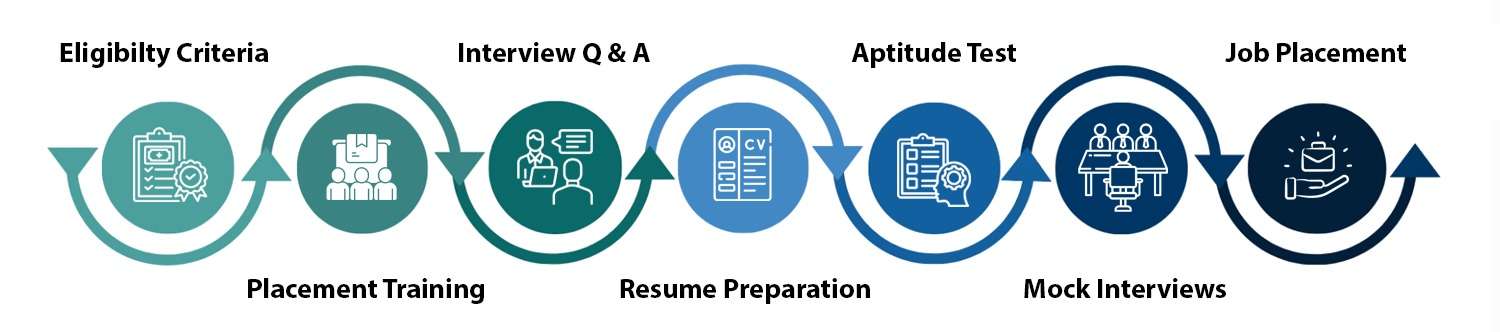
    We understand that the ultimate goal of taking a data science course in Noida is to secure a high-paying job. That is why we are famous for our data science course in Noida with placement track record.

    At Appwars Technologies, our dedicated placement cell works tirelessly to bridge the gap between our students and top MNCs. Here is how our data science training in Noida gets you hired:

    Resume Building: We don’t just leave you with a generic resume. We help you craft an ATS-friendly (Applicant Tracking System) resume highlighting your Python for Data Science skills and the 6 mega projects you built.

    Mock Interviews: You will face technical and HR mock interviews conducted by industry experts. They will grill you on statistics, machine learning, and coding, ensuring you never freeze up in a real interview.

    LinkedIn Profile Optimization: In 2026, recruiters live on LinkedIn. We teach you how to optimize your profile so HRs reach out to you.

    Guaranteed Interview Calls: Because we are the best data science training institute in Noida, we have tie-ups with hundreds of tech companies, startups, and MNCs in the Delhi-NCR region. We arrange direct interview opportunities for our certified students.

    When you enroll in our data science institute in Noida, you are not just buying a course; you are investing in a career transformation.
    Our Process

    our process

    Data Science with Gen AI Course Fees

    New Batch Starting
    6 Months Course Fees
    ₹55,000/-
    ₹48,000/-
    Flat ₹7,000 OFF
    • 15 Students Per Batch
    • Live offline & online Classes from Industry Expert
    • Hands-on curriculum with Real-Life Projects
    New Batch Starting
    8 Months Course Fees
    ₹75,000/-
    ₹65,000/-
    Flat ₹10,000 OFF
    • 15 Students Per Batch
    • Live offline & online Classes from Industry Expert
    • Hands-on curriculum with Real-Life Projects

    Got more questions?

    Talk to our team directly

    Contact us and our academic counsellor will get in touch with you shortly

    Student Testimonials

    Frequently Asked Questions

    Which is the best Data Science course in Noida?

    Appwars Technologies is widely recognized as providing the best data science course in Noida. We earn this reputation through our beginner-friendly approach, highly experienced trainers, extensive coverage of Python for Data Science, six real-time industry projects, and a dedicated data science course in Noida with placement guarantee.

    What is the duration of the Data Science course?

    Our complete data science training in Noida typically takes between 4 to 6 months to complete. This duration ensures we cover everything from basic programming to advanced machine learning and deep learning, giving you ample time to build your projects and prepare for interviews. Fast-track weekend batches are also available for working professionals.

    What is the Data Scientist salary in India?

    In India, the salary for Data Scientists is highly lucrative. Freshers can start anywhere between ₹4,00,000 to ₹8,00,000 per annum. With 2 to 4 years of experience, salaries usually jump to ₹12,00,000 to ₹18,00,000. Experts and Leads can easily earn upwards of ₹25,00,000. Completing your training at a premier data science institute in Noida gives you the negotiation power to secure the higher end of these brackets

    Can beginners learn Data Science?

    Yes, absolutely! Our data science course in Noida is crafted with a "zero-to-hero" approach. We include a mandatory beginner-friendly statement: You do not need to be a math genius or a coding wizard to start. We teach the foundational mathematics, statistics, and Python for Data Science completely from scratch.

    Is Python mandatory for Data Science?

    While there are other languages like R, Python is universally considered mandatory for modern data science. It is easy to read, has massive community support, and features powerful libraries (like Pandas and TensorFlow). That is why our data science training in Noida heavily focuses on Python for Data Science, ensuring you are aligned with current industry standards.

    Does Appwars provide placement support?

    Yes, 100%. We proudly offer a data science course in Noida with placement assistance. This includes resume optimization, portfolio building, multiple mock interviews, and guaranteed interview scheduling with our network of hiring partners across India and the Delhi-NCR region.

    What projects are included?

    As the best data science training institute in Noida, we believe in practical learning. You will complete a minimum of 6 industry projects, including Sales Forecasting, Fake News Detection, Customer Segmentation, a Movie Recommendation System, Stock Market Prediction, and an HR Analytics Dashboard.

    Which companies hire Data Science students?

    The demand is everywhere! Our alumni have been placed in top-tier IT service companies (TCS, Infosys, Wipro, HCL), big four consulting firms (EY, Deloitte, PwC, KPMG), product-based startups, e-commerce giants (Amazon, Flipkart), and massive financial institutions. Taking a data science course in Noida opens doors to virtually every sector.

    Related Courses

    data analytics

    Data Analytics

    machine-learning

    Machine Learning

    power-bi

    Power BI Training

    excel

    Advance Excel

    4.9/5 - (1150 votes)
    Fill the Form Below

    Get a flat. 15% Off on All Courses