Let’s face a hard truth about learning web development: watching endless tutorial videos without writing your own code is like trying to learn how to swim by watching YouTube. It feels productive, but the moment you jump into the water, you sink.
If you truly want to master full-stack development, you have to build MERN stack projects. There is no shortcut.
You need to write the code, break the application, stare at your screen for hours, and finally feel the unmatched joy of fixing a bug caused by a missing comma.
In this complete guide, we will explore the absolute best MERN stack project ideas best for different stages of your coding journey. If you are a total beginner trying to escape “tutorial hell,” a job seeker wanting to polish your portfolio, or a student searching for MERN stack projects for final year submissions, we have you covered.
But first, let’s look at the logic and facts behind why this tech stack is worth your time.
Why Choose the MERN Stack in 2026?
Before you invest hundreds of hours building MERN projects, you need to know if the technology is actually in demand. Spoiler alert: It absolutely is.
After learning the MERN Stack Course in Noida, Delhi, Ghaziabad, and any other city, you will know MERN stands for MongoDB (database), Express.js (backend framework), React (frontend library), and Node.js (runtime environment). The magic here is that everything runs on JavaScript.
According to recent Stack Overflow Developer Surveys, JavaScript remains the undisputed king of programming languages, used by over 66% of developers worldwide. Furthermore, Node.js and React consistently rank at the top of the most popular web technologies.
Companies love the MERN stack because it allows them to hire full-stack developers who speak one unified language from the server to the browser. It reduces development costs, speeds up the time-to-market, and offers incredible scalability.
By building solid projects on the MERN stack, you instantly align your skills with what the actual job market demands. You show recruiters that you can handle databases, design RESTful APIs, and create interactive user interfaces.
Now, let’s dive into the ultimate list of MERN stack projects.
Top 3 MERN Stack Projects for Beginners
If you are just starting out, keep things simple. Do not try to build the next Facebook on your first try. Your goal here is to understand how the four technologies communicate with each other.
Here are the best beginner-friendly MERN stack project ideas to get your hands dirty.
1. Smart To-Do & Task Management Application

Yes, the classic to-do list. It sounds cliché, but it is the “Hello World” of full-stack development. Building a task manager forces you to master the holy grail of databases: CRUD operations (Create, Read, Update, Delete).
What you will build:
A clean, responsive web application where users can add tasks, mark them as complete, edit the text, and delete them.
Features to Implement:
- A clean React user interface using functional components and hooks (useState, useEffect).
- A REST API built with Node.js and Express to handle incoming requests.
- A MongoDB database to permanently store the tasks.
- Simple form validation to prevent users from submitting empty tasks.
Why this builds your resume:
It proves you understand the fundamental data flow. You will learn how to send a POST request from React, route it through Express, and save it in MongoDB. This is the foundation of almost all MERN stack projects.
2. Personal Finance & Expense Tracker

Once you conquer basic CRUD operations, it is time to work with numbers and calculations. An expense tracker is practical, looks great in a portfolio, and introduces you to state management.
What you will build:
An application where users log their daily income and expenses. The app will calculate the total balance and display a visual chart of their spending habits.
Features to Implement:
- A dashboard displaying total income, total expenses, and current balance.
- A transaction history list categorized by type (e.g., groceries, rent, entertainment).
- Integration with a charting library like Chart.js or Recharts to visualize data.
- Mongoose schemas to structure the financial data correctly in MongoDB.
Why this builds your resume:
Handling financial data requires precision. This project teaches you how to aggregate data in MongoDB and manage complex state changes in React. It shows employers you can build tools that solve actual everyday problems.
3. Dynamic Weather Dashboard
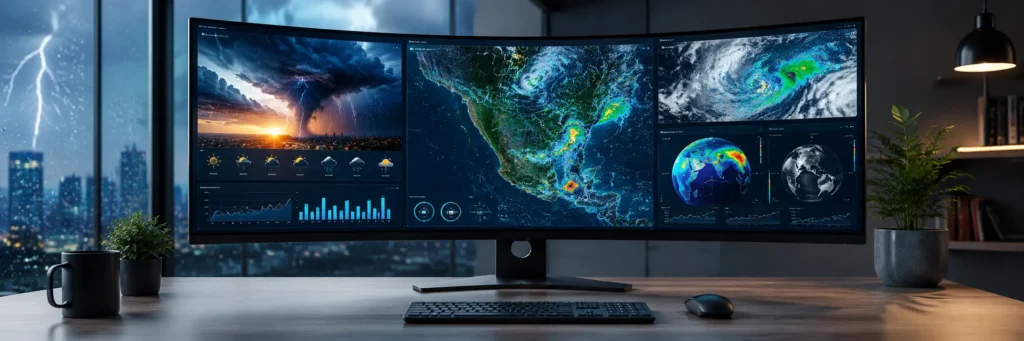
Building APIs from scratch is great, but a real-world developer also needs to know how to consume third-party APIs. A weather dashboard is the perfect stepping stone.
What you will build:
An app that allows users to search for any city in the world and view real-time weather conditions, humidity, wind speed, and a 5-day forecast.
Features to Implement:
- Integration with a free external API (like OpenWeatherMap).
- A backend proxy server. Instead of React calling the API directly (which exposes your API keys), your React frontend calls your Express backend, which then calls the weather API securely.
- Search history saved to MongoDB so users can quickly see weather for their favorite cities.
Why this builds your resume:
Security matters. Hiding API keys in a backend server is a crucial industry practice. This project proves you understand backend security basics and asynchronous JavaScript operations.
4 Impressive MERN Stack Project Ideas for Your Resume
Once you nail the basics, you need to level up. To grab a recruiter’s attention, your MERN projects must feature authentication, complex state management, and real-world utility. These intermediate projects will make your GitHub profile shine.
4. Full-Fledged E-commerce Storefront

If you want to get hired, build an e-commerce platform. Almost every company sells something online, and understanding the architecture of a digital store makes you a highly valuable asset.
What you will build:
A complete shopping experience featuring a product catalog, a shopping cart, and a secure checkout process.
Features to Implement:
- User authentication (JSON Web Tokens – JWT) for secure login and registration.
- An admin panel to add, update, and delete products from the MongoDB database.
- A robust shopping cart managed by Redux or the React Context API.
- Payment gateway integration using the Stripe API.
Why this builds your resume:
This is one of the most comprehensive MERN stack projects you can build. It proves you can handle secure user data, manage complex global state, and integrate financial transactions. When recruiters see a working Stripe integration, they instantly know you mean business.
5. Real-Time Chat Application

The web is moving towards real-time interactivity. Static pages are out; dynamic, instant communication is in. Building a chat app introduces you to the magic of WebSockets.
What you will build:
An instant messaging platform similar to WhatsApp Web or Discord, where multiple users can join rooms and chat without refreshing the page.
Features to Implement:
- Socket.io integration for bidirectional, real-time communication between the client and server.
- User authentication and private messaging capabilities.
- Message history storage in MongoDB so users can read past conversations.
- Online/offline status indicators.
Why this builds your resume:
Real-time features intimidate many junior developers. By executing this project, you demonstrate a deep understanding of continuous server connections and event-driven programming. It is a massive green flag for hiring managers.
6. Job Board & Portal App

A job board is essentially a specialized marketplace connecting two distinct user types: job seekers and employers. Handling different user roles is a core requirement for enterprise software.
What you will build:
A platform where companies can post job openings, and candidates can upload their resumes and apply for those roles.
Features to Implement:
- Role-Based Access Control (RBAC). Employers see an applicant dashboard, while candidates see an application history.
- Advanced search and filtering capabilities (filter jobs by location, salary, and tech stack).
- File upload functionality (using Multer) allowing users to upload PDF resumes to your server or a cloud storage bucket like AWS S3.
Why this builds your resume:
Enterprise applications thrive on user roles and permissions. This project shows you understand how to protect specific API routes based on who is logged in. Plus, implementing complex search queries in MongoDB highlights your database skills.
7. Markdown-Based Blogging CMS

Content Management Systems (CMS) power a massive portion of the internet. Building your own CMS from scratch is incredibly satisfying and teaches you how to handle rich text data.
What you will build:
A platform where writers can publish, edit, and format blog posts using Markdown, while readers can leave comments and ‘like’ articles.
Features to Implement:
- A Markdown editor integration in the React frontend.
- Relational data modeling in MongoDB (linking comments and likes to specific users and specific posts).
- Pagination and infinite scrolling for reading multiple blog posts.
- SEO-friendly URL routing.
Why this builds your resume:
Handling relational data in a NoSQL database like MongoDB requires strategic thinking. This project proves you know how to structure collections efficiently and handle heavy data rendering on the frontend without crashing the browser.
3 Complex MERN Stack Projects for Final Year Students
Are you a university student looking for the ultimate graduation project? You need something substantial. Mern stack projects for final year submissions must solve large-scale problems. feature multiple moving parts and showcase architectural brilliance.
Here are the heavy hitters. These projects on the MERN stack will not only score you top grades but will also serve as the ultimate portfolio centerpiece.
8. Complete Hospital Management System

Healthcare software requires strict security, absolute reliability, and massive data handling. A hospital management system is the perfect academic challenge.
What you will build:
A centralized dashboard connecting patients, doctors, and hospital administrators.
Features to Implement:
- A multi-tiered user authentication system (admin, doctor, patient, and receptionist).
- An interactive appointment booking engine that prevents double-booking.
- Secure digital medical records and prescription generation.
- Automated email notifications (using Nodemailer) for appointment reminders.
Why this is perfect for your final year:
Academic evaluators look for complexity and real-world application. This system requires meticulous database schema design. You must link doctors to departments, patients to doctors, and appointments to specific time slots. It is a masterclass in backend logic and one of the most respected MERN stack projects for final-year students.
9. Online Learning Platform (EdTech Portal)

The EdTech industry is booming. Building a platform that streams educational content showcases your ability to handle heavy media files and complex user progression.
What you will build:
A clone of platforms like Udemy or Coursera, where instructors can upload courses and students can purchase and watch them.
Features to Implement:
- Video upload and streaming capabilities.
- Progress tracking (saving which videos a student has completed to MongoDB).
- A review and rating system with average calculation logic.
- Payment gateway integration for course purchases.
Why this is perfect for your final year:
Handling video files is notoriously difficult. This project forces you to learn about cloud storage, content delivery networks (CDNs), and optimized database queries. It proves you can build applications that handle large amounts of bandwidth and data safely.
10. Social Media Clone with Real-Time Notifications

If you want to flex your coding muscles, build a social network. It combines almost every complex feature we have discussed so far into one massive ecosystem.
What you will build:
A fully functional social platform where users can post images, follow friends, like posts, and receive instant notifications.
Features to Implement:
- Complex relational algorithms (feed generation based on who a user follows).
- Image uploading, cropping, and compression.
- Real-time push notifications using Socket.io (e.g., “John liked your post”).
- Infinite scrolling and lazy loading for smooth performance.
Why this is perfect for your final year:
This is the holy grail of MERN stack project ideas. It requires an immaculate database design to ensure the feed loads quickly, even with thousands of posts. Evaluators and future employers will see this and instantly recognize your senior-level potential.
How to Deploy Your Projects on MERN Stack
Building these applications on your local machine (localhost:3000) is only half the battle. If an employer or a professor cannot click a link and see your app working live, it basically does not exist.
Deploying projects on the MERN stack used to be a nightmare, but modern cloud platforms make it incredibly straightforward. Here is the industry-standard approach for 2026:
- Host the Database on MongoDB Atlas: Never host your own database on a virtual machine unless you love stress. MongoDB Atlas is a fully managed cloud database. It is secure, fast, and offers a generous free tier for developers.
- Deploy the Node.js Backend on Render or Railway: Platforms like Render or Railway connect directly to your GitHub repository. Every time you push new backend code, they automatically rebuild and deploy your server. They handle the SSL certificates and server environments perfectly.
- Host the React frontend on Vercel or Netlify: Vercel was built for frontend frameworks. You simply link your frontend repository, and it deploys your React application globally on a blazing-fast Content Delivery Network (CDN) in seconds.
Remember to configure your environment variables (.env files) securely during deployment. Never push your MongoDB URI or JWT secret keys to a public GitHub repository. Security is a non-negotiable trait of a professional developer.
Final Thoughts and Your Next Steps
Stop researching and start typing.
You now possess the ultimate roadmap of MERN stack projects. Whether you start with a humble to-do list or dive straight into a complex hospital management system, the key is consistency.
Write clean code. Comment on your logic. Use proper Git version control. Most importantly, do not copy and paste code that you do not understand. When you run into errors, and trust me, you will run into hundreds of them, read the error logs, consult the documentation, and think logically. That struggle is exactly where the learning happens.
Pick one of these MERN stack projects for your final year or your portfolio today. Set up your development environment, open your code editor, and write that first line of JavaScript. Your future career as a highly paid full-stack developer depends on the code you write today. You can also get the from the Appwars Technologies’s expert mentors.
Read More: Top 20 Data Science Projects Ideas, Top 20 React js Projects Ideas