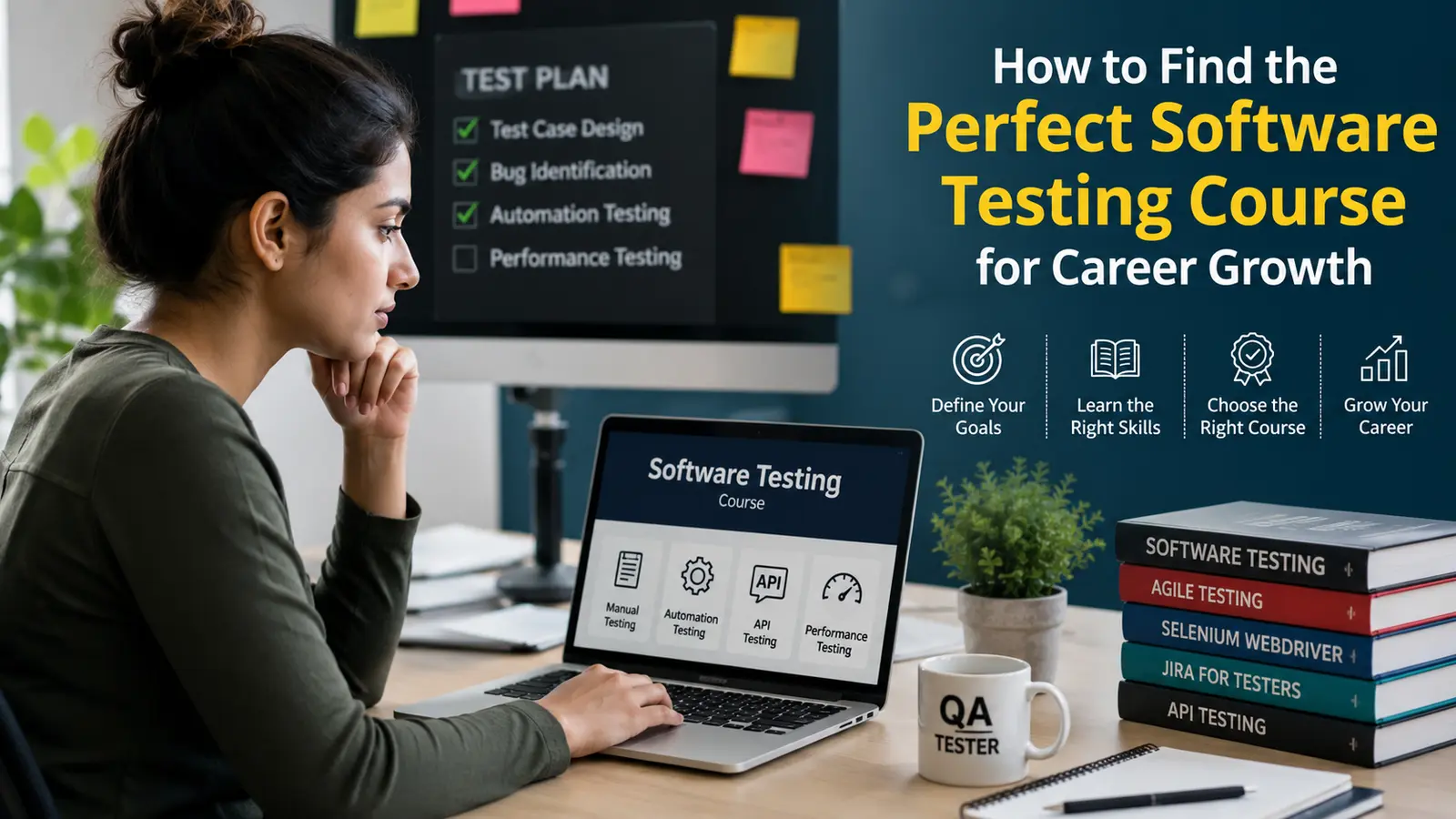
Every product team I’ve talked to in the last few years is short on good testers. Apps ship faster now, releases happen weekly instead of quarterly, and someone has to catch the bugs before customers do. That’s why a software testing course has become one of the more practical bets you can make for a tech career, even if you’re starting from zero.
But picking the wrong course wastes months and money. I’ve seen people finish a “certified” program and still not know how to write a single Selenium script. So this guide walks through what actually matters: what these courses cover, what to check before you pay, which skills carry real weight in interviews, and the mistakes that quietly derail people. By the end, you’ll know exactly how to compare your options and pick a program that gets you hired.
What is a software testing course?
A software testing course teaches you how to check whether an application works the way it’s supposed to, before real users find out the hard way. That includes writing test cases, running them manually, logging bugs, and increasingly, writing code that runs those tests automatically.
Manual testing means a person clicks through the app, follows a test script, and notes down what breaks. It’s slower but it catches things automation misses, weird UI glitches, confusing flows, edge cases nobody scripted for. Automation testing flips that: you write code (usually with a tool like Selenium) that runs the same checks over and over, fast, without a human clicking anything. Most modern QA roles want both skills, not one or the other.
Who should actually take this course? Fresh graduates who want an entry point into IT without deep coding knowledge. Career switchers coming from support, operations, or even non-tech backgrounds. And developers who want to add testing to their skill set because QA-literate developers get picked for better projects.
Why software testing is a great career choice
Demand for testers hasn’t slowed down. Every company shipping software, banks, e-commerce, healthcare apps, needs someone verifying that software before it goes live. That demand isn’t tied to one industry, which is part of what makes this career resilient.
Pay reflects that demand too. A fresher tester in India can expect a reasonable starting package, and that number climbs fast once you add automation skills and 2 to 3 years of experience. Compare that to roles requiring years of computer science education just to get an entry-level shot, and testing looks like a shorter runway to a decent salary.
There’s also stability here that a lot of tech roles don’t have. QA isn’t the first team cut when budgets tighten, because untested software is expensive in a different way: refunds, breach complaints, app store bans. And the career ladder is real. Manual tester to automation tester to SDET to QA lead to test architect. Each step pays more and each step is achievable with the right training, not just tenure.
Key factors to consider before choosing a software testing course
The curriculum should be updated for how testing actually works today. If a syllabus doesn’t mention API testing or CI/CD pipelines, that’s a program stuck in 2015.
Manual and automation testing both need to be covered, together, not as separate add-on modules you pay extra for later. A course that only teaches manual testing is training you for a shrinking part of the job.
Tool coverage matters more than most people realize going in. Selenium for automation, JMeter for performance and load testing, Postman or similar for API testing, SQL for database validation, and Git for version control. If a course skips even one of these, you’ll be learning it on your own time later anyway.
Live projects separate a real course from a slideshow. You want to test something that resembles a live app, not a toy example built for the course. Employers ask about projects in interviews, and “I watched videos” doesn’t land the same as “I built a regression suite for a mock e-commerce checkout.”
Trainer experience is worth checking directly. Ask how many years the trainer has spent actually testing software in a company, not just teaching. Someone who’s sat through a production outage caused by a missed test case teaches differently than someone reading off slides.
Placement assistance and internship opportunities are where a lot of institutes oversell. Ask for actual placement numbers from the last 6 months, not a testimonial page that hasn’t been updated in 2 years.
Certification adds credibility to your resume, especially industry-recognized ones like ISTQB. It won’t get you hired by itself, but it clears the first filter on a lot of applicant tracking systems.
Flexible learning modes matter if you’re working full-time or managing family responsibilities. Online, offline, weekend batches, recorded sessions, check which format actually fits your life before enrolling, not after.
Student reviews and success stories tell you what actually happened after people paid, and Google reviews are usually more honest than the testimonials on the institute’s own website.
Essential skills you should learn
Manual testing is the foundation. You need to understand test case design, boundary value analysis, and how to think like someone trying to break the app, not just use it.
Automation testing is where the higher-paying roles live. Selenium WebDriver specifically is the industry standard for browser automation, and most job postings for testers with 1+ years of experience mention it by name.
API testing has grown fast because so many apps today are built on microservices talking to each other through APIs. Tools like Postman let you verify those connections work correctly, independent of the UI.
SQL comes up constantly. Testers need to query databases directly to confirm the data an app displays actually matches what’s stored. Skipping SQL means you can’t verify half of what a real bug report requires.
Bug tracking through Jira is basically universal in professional QA teams. You’ll log defects, track their status, and communicate with developers through it daily.
Test case writing is a skill in itself. Clear, reproducible steps that another tester (or a developer six months later) can follow without asking you questions.
Agile and Scrum knowledge matters because most teams don’t work in old-school waterfall cycles anymore. Sprints, standups, and backlog grooming are part of daily QA work now.
Version control through Git lets you work alongside developers, track changes to test scripts, and collaborate without overwriting each other’s work.
Basic programming in Java or Python underpins most automation frameworks. You don’t need to be a software engineer, but you do need enough comfort with loops, conditionals, and functions to write and debug test scripts.
Questions to ask before enrolling
Is the curriculum industry updated, meaning has it been revised in the last year to reflect current tools and practices rather than a syllabus written half a decade ago?
Are live projects included, and can the institute show you an example of what a past student actually built?
Will you receive placement support, and what does that support actually consist of: resume reviews, mock interviews, direct company referrals, or just a generic job board link?
Are interview preparation sessions available, covering the specific technical questions testers get asked, not just general soft-skills coaching?
Is certification provided at the end, and is it recognized outside the institute itself, or only useful as a certificate to frame?
Common mistakes students make
Choosing based only on low fees is the most common one. A cheap course that skips automation training will cost you more later when you have to relearn everything through a second, better program.
Ignoring practical training happens when people assume watching videos equals learning. Testing is a hands-on skill, and you learn it by actually breaking things, not by watching someone else break things on screen.
Not checking trainer experience means you might learn testing theory from someone who’s never worked a real QA job. That gap shows up fast in interviews when hiring managers ask scenario-based questions.
Skipping placement support seems fine until you finish the course and realize job hunting alone, with no resume guidance or referrals, takes far longer than expected.
Ignoring student reviews means missing red flags that past students already flagged publicly. A few minutes of research here saves months of regret.
Not comparing multiple institutes leads people to sign up with the first sales call that sounds convincing. Every serious institute expects you to compare, and the good ones don’t pressure you to skip that step.
How to compare different software testing courses
Line up the programs you’re considering side by side and look at the same details for each: how current the curriculum actually is, whether live projects are part of the program or an afterthought, which specific tools get covered in depth versus just mentioned once, how much real industry experience the trainers have, what placement support looks like in practice, whether the certification carries weight with employers, how long the course runs from start to finish, and what the total fee actually includes once you account for any extra charges for tools or certification exams.
Doing this comparison on paper, even a simple notes app list, keeps you from being swayed by whichever sales team calls you back fastest.
Career opportunities after completing a software testing course
Software tester is the entry point most people start at, focused on manual test execution and bug reporting.
QA engineer roles expand into test planning and quality process ownership across a project, not just execution.
Automation tester and Selenium tester roles focus specifically on writing and maintaining automated test scripts, and these tend to pay noticeably more than manual-only roles.
Test analyst positions lean into requirements analysis, deciding what needs testing and why, often bridging between business teams and QA.
QA automation engineer is a step up from automation tester, usually involving framework design and mentoring junior testers.
Performance tester roles use tools like JMeter to check how an app holds up under load, a specialized niche with steady demand.
API tester focuses purely on backend service verification, a role that’s grown alongside the shift to microservices architecture.
Tips to get your first software testing job
Build a couple of testing projects on your own time, even a simple e-commerce site or a public demo app works, and document your test cases and bugs found like you would on the job.
Learn GitHub well enough to push your test scripts and show a portfolio, because a public repo often carries more weight in interviews than a certificate does.
Create a resume that lists specific tools and real project outcomes instead of vague phrases like “responsible for testing various applications.”
Practice interview questions specific to testing: how you’d test a login page, how you’d prioritize test cases under a tight deadline, how you’d explain a bug to a developer who disagrees it’s a bug.
Earn a recognized certification like ISTQB if your course doesn’t already include one, since it’s a low-cost way to clear resume filters.
Apply for internships even if they’re unpaid or low-paid at first, because that first line of real experience on a resume changes how recruiters read everything else on it.
Keep learning new tools after you’re hired too. Testing tech shifts (cloud testing, AI-assisted test generation, new frameworks) and the testers who keep up are the ones who get promoted.
Conclusion
Picking the right software testing course comes down to a handful of things that actually matter: an updated curriculum covering both manual and automation testing, real live projects, trainers with genuine industry background, and placement support that goes beyond a promise on a brochure. Certification helps, but it’s the practical skills, Selenium, API testing, SQL, Git, that get you through interviews and keep you employed once you’re hired.
Don’t pick based on the lowest fee alone, and don’t skip the step of comparing a few institutes side by side. Ask the hard questions before you pay, not after. If you get the fundamentals right at this stage, software testing offers a genuinely stable, well-paying career with room to grow for years. Start researching your options today, and make the decision that sets up your testing career properly from day one.
Frequently asked questions
1. How do I choose a software testing course?
Look at whether the curriculum covers both manual and automation testing, check if live projects are included, verify the trainer’s actual industry experience, and confirm placement support is more than a formality. Compare at least 3 institutes before deciding.
2. Which software testing course is best for beginners?
The best beginner course covers manual testing fundamentals first, then moves into automation with Selenium, without assuming prior programming knowledge. Look for one with a structured beginner track rather than a course built for people who already code.
3. Is coding required for software testing?
Not for manual testing roles. But automation testing, where the better salaries are, requires basic programming in Java or Python. Most courses teach this from scratch, so you don’t need prior coding experience to start.
4. Manual vs automation testing, which is better?
Neither replaces the other. Manual testing catches usability issues and edge cases automation scripts miss. Automation testing handles repetitive regression checks fast and consistently. The strongest testers know both.
5. How long does it take to become a software tester?
A solid course runs 3 to 6 months for someone starting from scratch, covering manual and automation testing together. Add another month or two of practice projects before you’re truly interview-ready.
6. Which testing tools should beginners learn?
Start with Selenium for automation, Postman for API testing, JMeter for performance testing, SQL for database checks, and Jira for bug tracking. These five show up across the vast majority of QA job postings.
7. Can freshers get a software testing job?
Yes, especially with a certification, a couple of documented projects, and demonstrable knowledge of at least one automation tool. Manual-testing-only freshers face more competition than those who’ve added automation skills.
8. What salary can a beginner expect?
Entry-level testers in India typically start in the range of 2.5 to 4 lakhs per year, with automation skills pushing that figure higher. Exact numbers vary by city and company size, so treat this as a starting benchmark, not a guarantee.
9. Is software testing a good career in 2026?
Yes. Software release cycles keep shrinking, which means more testing work, not less. AI tools are changing parts of the job, but they’ve increased demand for testers who understand both automation and the judgment calls AI still can’t make.
Read also more:- Software testing skills in 2026