appwars logo

Advanced Machine Learning Training in Noida with Real-Life Projects

Appwars Technologies offers the best Machine Learning Training in Noida. Discover the power of data. Deep learning, neural networks, supervised and unsupervised learning, and real-time model deployment are just a few of the fundamental machine learning concepts that you will learn in our extensive course. This training program prepares you for a successful career in data science and artificial intelligence, supported by real-world projects and placement assistance, and led by professionals in the field. Enroll now to learn machine learning from the ground up.

Certification Partners

Official

Our Students Placed In These Companies

Machine Learning with AI Course Syllabus

MACHINE LEARNING

1. Introduction to Machine Learning

  • Introduction To Machine Learning
  • Importance Of Machine Learning
  • How did Machine Learning work?
  • Relationship Between Artificial Intelligence, Machine
  • Learning, and Data Science
  • Different Categories of Machine Learning: Supervised,
  • Unsupervised and Reinforcement
  • Applications of Machine Learning

2. Supervised Machine Learning

  • Linear Regression
  • Simple Linear Regression
  • Multiple Linear Regression
  • Performance Metrics: Accuracy Scores, R^2 And Adjusted RA2
  • To Compare the Model with Different Numbers of Independent Variables.LOGIES
  • Approaches to Feature Selection: Univariate Selection, Feature Importance, RFEPment | Consultancy
  • Parameter Tuning and Model Evaluation
  • Data Transformation and Normalization
  • Ridge & Lasso Regression (L1 & L2)

3. Logistic Regression

  • Concept of Logistic Regression
  • Univariate Logistic Regression
  • Multivariate Logistic Regression: Model Building and Evaluation
  • Dealing with Categorical Independent Variable – Hot Encoding Vs Dummy Variable

4. Decision Trees

  • Concept of Decision Trees
  • Importance and Usage of Ginny And Entropy
  • Information Gain
  • Visualizing Decision Trees Nodes and Splits
  • Working of The Decision Tree Algorithm
  • Extending Decision Trees to Regressing Problem
  • Evaluating Decision Trees Models: Accuracy, Precision, Recall, Confusion Matrix

5. Classification – k Nearest Neighbor (KNN

  • Classification and Regression
  • Application, Advantages and Disadvantages
  • Distance Metric – Euclidean, Manhattan, Chebyshev, Minkow
  • Measuring accuracy using Cross-Validation, Stratified k-fold, Confusion Matrix, Precision, Recall, Fl-score.

6. Naive Bayes Classifier

  • The Bayes Theorem
  • The Gaussian Naïve’s Bayes Classifier – Assumptions of The Naïve Bayes Classifier, Functioning of The Naive’s Bayes Algorithm

7. Classification SVM(Support Vector Machine)

  • Classification and Regression 
  • Separating line, Margin and Support Vectors 
  • Linear SVC Classification
  • Polynomial Kernel – Kernel Trick
  • Gaussian Radial Basis Function (RBF)
  • Grid Search to tune hyper-parameters
  • Support Vector Regression

8. Unsupervised Learning – Clustering

  • Introduction to Clustering
  • K-Means Clustering: Linkage
  • Use of Elbow Curve & Silhouette Score
  • Hierarchical Clustering – Agglomerative & Divisive
  • Distance Matrix, Dendrogram

9. Density based clustering

  • DBSCAN (Density based clustering) Technique
  • Density based clustering
  • Eps: Density
  • Core, Border and Noise points
  • Density edge and Density connected points
  • DBSCAN Algorithm
  • Hyper Parameters: MinPts and EpsA
  • Advantages and Limitations of DBSCAN

10. Principal Component Analysis – PCА

  • Noise in The Data and Dimensionality Reduction
  • Capturing Variance – The Concept of Principal
  • Components
  • Assumptions in Using PCA
  • Eigenvectors and Orthogonality of Principal Components
  • What Is the Complexity Curve?
  • Advantages of Using PCA
  • The Working of The PCA Algorithm
  • Singular Value Decomposition

11. Ensemble Modelling

  • Popular Ensembles
  • Bagging
  • Bootstraр
  • Introduction to Random Forests
  • Feature Importance in Random Forests
  • Boosting 
  • How Boosting Algorithm Works? 
  • Adaboost 
  • Gradient Boost 
  • XGBoost 

PYTHON AND DATA SCIENCE LIBRARY

1. NumPy

  • Creating arrays 
  • Array  indexing
  • Array slicing
  • Numpy Data Types
  • Copy vs View
  • Array Shape
  • Array reshape
  • Iterating
  • Join
  • Search
  • Filter
  • Split
  • Sort

2. Pandas

  • Pandas Series
  • Pandas Data Frame 
  • ReadCSV
  • ReadJSON
  • Cleaning Data
  • Missing Value Handling 
  • Optimizing Data Format 
  • Redundancy Minimization
  • The corr) function
  • Plotting Graphs in pandas

3. Matplotlib

  • Welcome to the Data Visualization Section
  • Introduction to Matplotlib
  • Matplotlib Part 1
  • Matplotlib Part 2
  • Matplotlib Part 3

4. Seaborn

  • Introduction to Seaborn
  • Distribution Plots
  • Categorical Plots
  • Matrix Plots
  • Grids
  • Regression Plots
  • Style and Color

5. scikit-learn

  • Overview of Scikit-learn: Architecture and API design
  • Installing and importing Scikit-learn
  • Dataset loading utilities (load_iris, load_digits, etc.)
  • Working with real-world datasets (using pandas + sklearn)
  • Data preprocessing:

Handling missing values (Simplelmputer)

Feature scaling (StandardScaler, MinMaxScaler) 

Encoding categorical features (OneHotEncoder, LabelEncoder) 

  • Train-test split and cross-validation (train_test_split, cross_val_score) 

NLP - N-Grams

  • N-Grams are a fundamental concept in Natural Language Processing (NLP) used to analyze and predict sequences of words or characters in text data. An N-Gram is a contiguous sequence of N items (words or characters) from a given text. 

1. Unigram (1-Gram)

  • A sequence containing one word.
  • Example:

Sentence: “I love Al”

Unigrams:

  • I
  • love 
  • AI

2. Bigram (2-Gram)

  • A sequence containing two consecutive words.
  • Example:

Sentence: “I love Al”

Bigrams:

  • I love
  • love AlI

3. Trigram (3-Gram)

  • A sequence containing three consecutive words.
  • Example:

Sentence: “I love learning Al”

Trigrams:

  • love learning
  • love learning Al

Applications of N-Grams

  • Text prediction
  • Auto-complete systems
  • Spellchecking
  • Machine Translation
  • Sentiment Analysis
  • Chatbots & Virtual Assistants

LLM Transformer

  • Large Language Models (LLMs) are advanced Artificial Intelligence models designed to understand, generate, and process human language. Modern LLMs such as OpenAI GPT models are built using the Transformer architecture, which revolutionized Natural Language Processing (NLP). 

1. Encoder

  • Reads and understands the input text 
  • Extracts important features and context 

2. Decoder

  • Generates the output text 
  • Predicts the next word based on context 

Self-Attention Mechanism

  • The most important concept in Transformers is SelfAttention. 
  • It helps the model understand:

Which words are important

Relationship between words

Context of the sentence

How LLMs Work

  • Input text is converted into tokens 
  • Tokens are converted into embeddings
  • Transformer layers process the data
  • Attention mechanism identifies context
  • Model predicts the next word/token

Applications of LLM Transformers

  • Chatbots & Virtual Assistants 
  • Machine Translation 
  • Text Summarization
  • Content Generation 
  • Code Generation
  • Sentiment Analysis
  • Question Answering Systems

CURSOR AI + TRAE AI

Module 1: Introduction to Modern Al Tools

  • What is Al-first Development? 
  • Evolution of Al Coding Assistants 
  • Overview of CURSOR AI & TRAE AI 
  • How developers use these tools in real-world projects

Module 2: Getting Started with CURSOR AI 

Installation & Setup
  • Installing Cursor Editor
  • Integrating GitHub/GitLab
  • Setting environment, extensions & APIs
Understanding Key CURSOR Features
  • Smart Al Pair Programming
  • Code Autocomplete & Refactoring
  • Al Chat for Code Explanations
  • Multi-file Project Understanding
  • Cursor Composer Mode
  • Auto debugging assistance
  • Using Cursor for test-case generation
Hands-on with CURSOR AI
  • Building your first Al-assisted program
  • Real-time code optimization
  • Converting requirements into working code
  • Fixing bugs with Al suggestions
  • Al-generated documentation

Module 3: Introduction to TRAE AI

What is TRAE (Track-Reason-Execute) AI?
  • TRAE architecture overview
  • How TRAE agents understand and break tasks
  • Difference between standard LLM vs TRAE-based systems
TRAE AI Capabilities
  • Task tracking & workflow automation
  • Multi-step reasoning
  • Agent collaboration
  • Automated execution with human oversight
TRAE Al Tools & Platforms
  • TRAE SDK basics
  • Agent Studio Platforms
  • Integration with APIs & external tools

Module 4: Building Al Agents Using TRAE

Agent Fundamentals
  • Agent roles & responsibilities
  • Reasoning graph
  • Memory handling
  • Decision-making flow
Hands-On Agent Development
  • Creating your first TRAE-based agent
  • Connecting agent with external APIs
  • Automating data extraction & reporting
  • Building a task automation pipeline
Real-World Applications
  • Chatbots & virtual assistants 
  • Automated customer service flows 
  • Sales & lead management automation
  • Content creation & research automation

Module 5: CURSOR + TRAE Integration

  • How CURSOR helps build TRAE agents
  • Auto-code workflows for Al automation
  • Full-stack agent development
  • Automating testing & deployment using Al

Module 6: Advanced Al Development Workflow

  • Mlti-agent systems
  • Prompt engineering for agents
  • Workflow design patterns
  • Long-term memory integration
  • Secure Al development principles

Module 7: Capstone Project

  • Al-powered chatbot 
  • Automated data analytics agent
  • Code generation assistant
  • Workflow automation system

Module 8: Career Path & Industry Demand

  • Jobs in Al Agent Development
  • Using CURSOR & TRAE skills in MNC interviews
  • Portfolio building 
  • Resume + GitHub project guidance

ADVANCE PYTHON PROGRAMMING

1. introduction to python

  • Simple
  • Open Source
  • High Level Programming
  • Portable
  • Object and Procedure Oriented
  • Easy to Maintain

2. Input and Output Functions

  • The Input) function
  • The print) function

n use of % percent operator

n use of format()

3. Variable and Data Types

  • What is a Variable
  • Assign Values to variable
  • Typecasting
  • Data Types in Python

n Numeric

n String

n Boolean

n Compound

n List

n Tuple

n Set

n FrozenSet

n Dictionary

4. Operators in Python

  • Types of Operators

n Arithmetic Operators

n Comparison Operators

n Assignment Operators

n Logical Operators

n Bitwise Operators

n Identity Operators

n Membership Operators

n Operators Associativity

n Operator Precedence

n BEDMAS

5. Conditional Statements in Python

  • The if Statement
  • if- else statement
  • The elif Statement
  • Nested if-else ladder

6. Loops in Python

  • use of while loop 
  • use of for loop 
  • range) function
  • arange) function
  • The break Statement
  • The continue Statement
  • The pass statement

7. User defined functions in python

  • Define a function
  • calling a function
  • Types of function
  • UDF 
  • Function Arguments 
  • Functions Parameters 
  • Anonymous Function
  • Global and Local Variable
  • lambda
  • Map
  • Reduce
  • filter 
  • Mathematical Function 
  • Trigonometric Function 
  • Random Function 

8. Strings in python

  • Creating strings
  • difference between “” &”
  • creating multiline comment
  • basic string operations
  • creating slices in strings
  • String Built-in Functions
  • n capitalize()
  • n upper() 
  • n lower()
  • n isalnum()
  • n isalpha()
  • n isnumeric()
  • n isdecimal()
  • n islower()
  • n isupper()

9. List

  • Access List items
  • Change List items
  • Add List Items
  • Remove List Items
  • Loop List
  • List Comprehension
  • SortList 
  • Copy List 
  • Join List 
  • List built-in Method
  • n append()
  • n count()
  • n extend()
  • n reverse()
  • n sort() 

10. Tuple

  • Access Tuples
  • Update Tuples
  • UnpackTuples
  • LoopTuple
  • JoinTuples
  • Tuplebuilt-in Methods
  • n index)
  • n count0

11. Sets

  • Create Sets 
  • Access Set items 
  • Add Set items
  • Remove Set items
  • Loop Sets
  • Join Sets

12. Dictionaries

  • Create Dictionaries 
  • Access Dictionary item 
  • Change Dictionary items
  • Add Dictionary items
  • Remove Dictionary items
  • Loop Dictionaries
  • Copy Dictionaries
  • Nested Dictionaries
  • Dictionary built-in Method
  • n keys()
  • n values()
  • n items()
  • n get()

13. Python Modules

  • Date Module
  • Time Module
  • os Module
  • The import statement
  • The from…import Statement

ITERATORS- GENERATORS

Object Oriented Programming

  • Class 
  • Object 
  • Inheritance
  • Polymorphism
  • Overloading
  • Overriding
  • Abstraction
  • Encapsulation
  • Web scraping

PYTHON AND DATA SCIENCE LIBRARY

1. NumPy

  • Creating arrays 
  • Array  indexing
  • Array slicing
  • Numpy Data Types
  • Copy vs View
  • Array Shape
  • Array reshape
  • Iterating
  • Join
  • Search
  • Filter
  • Split
  • Sort

2. Pandas

  • Pandas Series
  • Pandas Data Frame 
  • ReadCSV
  • ReadJSON
  • Cleaning Data
  • Missing Value Handling 
  • Optimizing Data Format 
  • Redundancy Minimization
  • The corr) function
  • Plotting Graphs in pandas

3. Matplotlib

  • Welcome to the Data Visualization Section
  • Introduction to Matplotlib
  • Matplotlib Part 1
  • Matplotlib Part 2
  • Matplotlib Part 3

4. Seaborn

  • Introduction to Seaborn
  • Distribution Plots
  • Categorical Plots
  • Matrix Plots
  • Grids
  • Regression Plots
  • Style and Color

5. scikit-learn

  • Overview of Scikit-learn: Architecture and API design
  • Installing and importing Scikit-learn
  • Dataset loading utilities (load_iris, load_digits, etc.)
  • Working with real-world datasets (using pandas + sklearn)
  • Data preprocessing:

Handling missing values (Simplelmputer)

Feature scaling (StandardScaler, MinMaxScaler) 

Encoding categorical features (OneHotEncoder, LabelEncoder) 

  • Train-test split and cross-validation (train_test_split, cross_val_score) 

MACHINE LEARNING

1. Introduction to Machine Learning

  • Introduction to Machine Learning 
  • Importance Of Machine Learning
  • How did Machine Learning work?
  • Relationship Between Artificial Intelligence, Machine Learning, and Data Science
  • Different Categories of Machine Learning: Supervised, Unsupervised and Reinforcement
  • Applications of Machine Learning

2. Supervised Machine Learning

  • Linear Regression
  • Simple Linear Regression
  • Multiple Linear Regression
  • Performance Metrics: Accuracy Scores, R^2 And Adjusted RA2
  • To Compare the Model with Different Numbers of Independent Variables.
  • Approaches to Feature Selection: Univariate Selection, Feature Importance, RFE
  • Parameter Tuning and Model Evaluation
  • Data Transformation and Normalization
  • Ridge & Lasso Regression (L1 & L2)

3. Logistic Regression

  • Concept of Logistic Regression
  • Univariate Logistic Regression
  • Multivariate Logistic Regression: Model Building anp Evaluation
  • Dealing with Categorical Independent Variable – Hot Encoding Vs Dummy Variable

4. Decision Trees

  • Concept of Decision Trees
  • Importance and Usage of Ginny And Entropy
  • Information Gain
  • Visualizing Decision Trees Nodes and Splits
  • Working of The Decision Tree Algorithm
  • Extending Decision Trees to Regressing Problem
  • Evaluating Decision Trees Models: Accuracy, Precision, Recall, Confusion Matrix

5. Classification – k Nearest Neighbor (KNN)

  • Classification and Regression
  • Application, Advantages and Disadvantages
  • Distance Metric – Euclidean, Manhattan, Chebyshev, Minkow
  • Measuring accuracy using Cross-Validation, Stratified k-fold, Confusion Matrix,Precision, Recall, Fl-score.

6. Naive Bayes Classifier

  • The Bayes Theorem
  • The Gaussian Naïve’s Bayes Classifier – Assumptions of The Naïve Bayes Classifier,  Functioning of The Naïve’s Bayes Algorithm

7. Classification SVM (Support Vector Machine)

  • Classification and Regression
  • Separating line, Margin and Support Vectors 
  • Linear SVC Classification 
  • Polynomial Kernel – Kernel Trick
  • Gaussian Radial Basis Function (RBF)
  • Grid Search to tune hyper-parameters
  • Support Vector Regression

8. Unsupervised Learning – Clustering

  • Introduction to Clustering
  • K-Means Clustering: Linkage
  • Use of Elbow Curve & Silhouette Score
  • Hierarchical Clustering – Agglomerative & Divisive
  • Distance Matrix, Dendrogram

9. Density based clustering

  • DBSCAN (Density based clustering) Technique 
  • Density based clustering
  • Eps: Density
  • Core, Border and Noise points
  • Density edge and Density connected points
  • DBSCAN Algorithm
  • Hyper Parameters: MinPts and EpsA
  • Advantages and Limitations of DBSCAN

10. Principal Component Analysis – PCА

  • Noise in The Data and Dimensionality Reduction
  • Capturing Variance – The Concept of Principal
  • Components
  • Assumptions in Using PCA
  • Eigenvectors and Orthogonality of Principal Components
  • What Is the Complexity Curve?
  • Advantages of Using PCA
  • The Working of The PCA Algorithm
  • Singular Value Decomposition

11. Ensemble Modelling

  • Popular Ensembles
  • Bagging
  • Bootstrap
  • Introduction to Random Forests
  • Feature Importance in Random Forests
  • Boosting
  • How Boosting Algorithm Works?
  • Adaboost 
  • Gradient Boost
  • XGBoost

NLP - N-Grams

  • N-Grams are a fundamental concept in Natural Language Processing (NLP) used to analyze and predict sequences of words or characters in text data. An N-Gram is a contiguous sequence of N items (words or characters) from a given text. 

1. Unigram (1-Gram)

  • A sequence containing one word.
  • Example:

Sentence: “I love Al”

Unigrams:

  • I
  • love 
  • AI

2. Bigram (2-Gram)

  • A sequence containing two consecutive words.
  • Example:

Sentence: “I love Al”

Bigrams:

  • I love
  • love AlI

3. Trigram (3-Gram)

  • A sequence containing three consecutive words.
  • Example:

Sentence: “I love learning Al”

Trigrams:

  • love learning
  • love learning Al

Applications of N-Grams

  • Text prediction
  • Auto-complete systems
  • Spellchecking
  • Machine Translation
  • Sentiment Analysis
  • Chatbots & Virtual Assistants

LLM Transformer

  • Large Language Models (LLMs) are advanced Artificial Intelligence models designed to understand, generate, and process human language. Modern LLMs such as OpenAI GPT models are built using the Transformer architecture, which revolutionized Natural Language Processing (NLP). 

1. Encoder

  • Reads and understands the input text
  • Extracts important features and context

2. Decoder

  • Generates the output text 
  • Predicts the next word based on context 

Self-Attention Mechanism

  • The most important concept in Transformers is Self-Attention.
  • It helps the model understand:

Which words are important

Relationship between words

Context of the sentence

How LLMs Work

  • Input text is converted into tokens 
  • Tokens are converted into embeddings
  • Transformer layers process the data
  • Attention mechanism identifies context
  • Model predicts the next word/token

Applications of LLM Transformers

  • Chatbots & Virtual Assistants 
  • Machine Translation 
  • Text Summarization
  • Content Generation 
  • Code Generation 
  • Sentiment Analysis 
  • Question Answering Systems 

CURSOR AI + TRAE AI

Module 1: Introduction to Modern Al Tools

  • What is Al-first Development? 
  • Evolution of Al Coding Assistants 
  • Overview of CURSOR AI & TRAE AI 
  • How developers use these tools in real-world projects

Module 2: Getting Started with CURSOR AI 

Installation & Setup
  • Installing Cursor Editor
  • Integrating GitHub/GitLab
  • Setting environment, extensions & APIs
Understanding Key CURSOR Features
  • Smart Al Pair Programming
  • Code Autocomplete & Refactoring
  • Al Chat for Code Explanations
  • Multi-file Project Understanding
  • Cursor Composer Mode
  • Auto debugging assistance
  • Using Cursor for test-case generation
Hands-on with CURSOR AI
  • Building your first Al-assisted program
  • Real-time code optimization
  • Converting requirements into working code
  • Fixing bugs with Al suggestions
  • Al-generated documentation

Module 3: Introduction to TRAE AI

What is TRAE (Track-Reason-Execute) AI?
  • TRAE architecture overview
  • How TRAE agents understand and break tasks
  • Difference between standard LLM vs TRAE-based systems
TRAE AI Capabilities
  • Task tracking & workflow automation
  • Multi-step reasoning
  • Agent collaboration
  • Automated execution with human oversight
TRAE Al Tools & Platforms
  • TRAE SDK basics
  • Agent Studio Platforms
  • Integration with APIs & external tools

Module 4: Building Al Agents Using TRAE

Agent Fundamentals
  • Agent roles & responsibilities
  • Reasoning graph
  • Memory handling
  • Decision-making flow
Hands-On Agent Development
  • Creating your first TRAE-based agent
  • Connecting agent with external APIs
  • Automating data extraction & reporting
  • Building a task automation pipeline
Real-World Applications
  • Chatbots & virtual assistants 
  • Automated customer service flows 
  • Sales & lead management automation
  • Content creation & research automation

Module 5: CURSOR + TRAE Integration

  • How CURSOR helps build TRAE agents
  • Auto-code workflows for Al automation
  • Full-stack agent development
  • Automating testing & deployment using Al

Module 6: Advanced Al Development Workflow

  • Mlti-agent systems
  • Prompt engineering for agents
  • Workflow design patterns
  • Long-term memory integration
  • Secure Al development principles

Module 7: Capstone Project

  • Al-powered chatbot 
  • Automated data analytics agent
  • Code generation assistant
  • Workflow automation system

Module 8: Career Path & Industry Demand

  • Jobs in Al Agent Development
  • Using CURSOR & TRAE skills in MNC interviews
  • Portfolio building 
  • Resume + GitHub project guidance
Enquiry Now

    20+ Machine Learning Tools Covered

    numpy

    Numpy

    pandas

    Pandas

    matplotlib

    Matplotlib

    seaborn

    Seaborn

    jupyter

    Jupyter

    colab

    Colab

    claude

    Claude

    chatgpt

    ChatGPT

    scikit-learn

    Scikit learn

    postgresql

    Postgre SQL

    mysql

    My SQL

    pytorch

    Pytorch

    git hub

    GitHub

    plotly

    Plotly

    Tensor Flow

    Tensor Flow

    LangChain

    LangChain

    lightgbm

    LightGBM

    antigravity ai

    Antigravity

    cursor ai

    Cursor AI

    scipy

    SciPy

    trae ai

    TRAE AI

    kubernetes

    Kubernetes

    30+ Machine Learning Skills You Learn

    • Python Programming
    • Data Collection
    • Data Cleaning
    • Data Preprocessing
    • Exploratory Data Analysis (EDA)
    • Statistical Analysis
    • Probability
    • Feature Engineering
    • Feature Selection
    • Supervised Learning
    • Unsupervised Learning
    • Semi-Supervised Learning
    • Regression
    • Classification
    • Clustering
    • Dimensionality Reduction
    • Ensemble Learning
    • Reinforcement Learning
    • Model Training
    • Model Evaluation
    • Hyperparameter Tuning
    • Model Optimization
    • Cross-Validation
    • Model Selection
    • Predictive Modeling
    • Time Series Analysis
    • Anomaly Detection
    • Natural Language Processing (NLP)
    • Computer Vision
    • Deep Learning
    • Model Deployment
    • MLOps
    • Model Monitoring
    • Problem Solving
    • Critical Thinking

    Why Choose us?

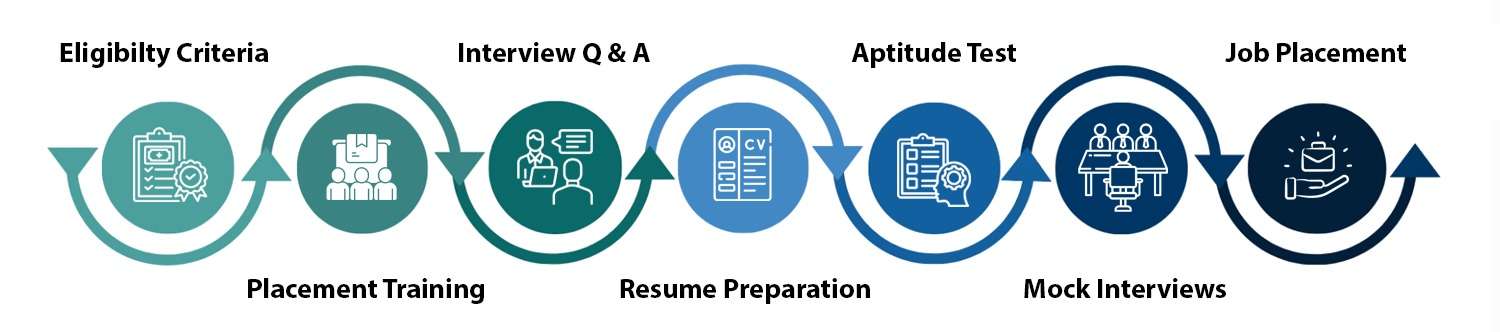
    Our Process

    our process

    Online Machine Learning Course Brings in the Better Job Opportunities

    Gain a competitive edge in the fast-paced world of technology with Machine Learning Training in Noida. In our comprehensive training programs help you adapt to market changes and modernize technology, enabling you to create a range of applications with modern aspects. APPWARS TECHNOLOGIES online courses are designed to be easily accessible and we pride ourselves as the No.  #1 leading machine learning training institute in Noida. Our expert trainers will guide you through the course, boosting your self-confidence and ensuring your success. With real-time assistance available throughout the training, completing our course will open doors to better job opportunities. Join us now and explore a better way of life.

    We conduct machine learning online training in Noida and the benefits are:

    • Machine learning online training in Noida saves time as there is no need to travel.
    • Doubt-clearing sessions are available for participants to clear any confusion.
    • The syllabus covers all the necessary topics for a comprehensive understanding of machine learning.
    • The training includes both practical and theoretical sessions to ensure a thorough learning experience.

    We are dedicated to helping you overcome any concerns or uncertainties you may have about completing the machine learning course successfully. With our expert guidance and support, you can rest assured that you will be able to acquire the necessary skills and knowledge to excel in this field. Let us help you pave the way to a successful career in machine learning.

    Here are the reasons to join our machine learning course:

    • We teach efficient data-handling techniques to help you become proficient in machine learning.
    • Our training instills confidence in implementing machine learning language in various web applications with positive results.
    • We provide job assistance to help you find your dream job and lead a worry-free life.

    You can take advantage of our machine learning online course in Noida and experience the benefits firsthand. We provide complete course details before enrollment, ensuring no confusion in the future. Join us with confidence and take the first step towards mastering machine learning.

    At our institute, we take pride in having expert trainers who can guide you through our machine learning course online. Our trainers are highly experienced and know how to motivate participants to excel in the field of machine learning. We are committed to providing you with the best possible training to make you an expert in handling the language with ease. Our ultimate goal is to help you achieve success in your career and we are always here to provide support whenever you need it. Join us today to experience the difference and explore better job opportunities.

    • MACHINE LEARNING Training in Noida follows IT management standards, ensuring high-quality education.
    • APPWARS TECHNOLOGIES is a leading training institute providing well-structured courses and dedicated employment services.
    • We offer flexible options with regular and weekend classes, as well as give assignments after each session to reinforce learning.
    • Our state-of-the-art lab is provided with updated technology, available for student use 24*7.
    • Our trainers are certified experts with years of industry experience, dedicated to helping students with project preparation, interview skills, and job placement.
    • We also provide free personality development sessions, such as English language fluency, mock interview, group discussion, and presentation skills.
    • We provide free study materials, PDFs, video training, lab guides, exam preparation, sample papers, and interview preparation.
    • Students are welcome to retake classes without any additional charges as many times as they need.
    • We specialize in helping students learn complex technical concepts with ease, providing a supportive learning environment.
    • Our trainers are professional and highly skilled in their field of expertise.
    • They constantly update themselves with the latest tools and technologies to provide the best training for the real working environment.
    • Our trainees are carefully selected by our recognized committee for their fieldwork by various organizations over the years.
    • Our trainees have many years of experience working in big organizations or institutes.
    • Our trainers are certified and they have at least 7 years of experience in industries as well as training experience.
    • Our trainees are connected with many companies and placement cells to provide support and help to the students for their placements.
    • APPWARS TECHNOLOGIES is committed to providing placement assistance to our students and has an assigned placement cell to place them.
    • The placement cell provides necessary guidelines to students during the placement process to help them to get their dream jobs.
    • In addition to placement assistance, APPWARS TECHNOLOGIES also offers resume-building services to help students create impressive resume that aligns with the latest industry trends.
    • Daily personality development sessions, including group discussions, mock interviews, and presentation skills, are conducted to help students present themselves confidently.
    • APPWARS TECHNOLOGIES is dedicated to helping students achieve their job aspirations by providing extensive training and career support.
    • Regular classes are available 5 days a week with morning, afternoon, and evening batches.
    • Weekend classes are available on Saturdays and Sundays.
    • Fast-track classes are available for those who want to complete the course in a shorter duration.
    • One-to-one classes are available for personalized attention and learning experience.
    • Corporate training are available for companies who want to train their employees in machine learning.
    • Live online classes are available for those who prefer to learn from the comfort of their own homes.

    BE / BTech / MCA passed aspirants to make their careers as Web Developers / Data Scientists

    IT-Professionals who want to get a career as a Programming Expert

    Professionals from non-IT bkg, and want to establish in IT

    Candidates who would like to restart their career after a gap

    Web Designers for the next level of their career.
    Machine Learning Course Fees

    New Batch Starting
    2 Months Course Fees
    ₹30,000/-
    ₹25,000/-
    Flat ₹5,000 OFF
    • Machine Learning using Python
    • Live offline & online Classes from Industry Expert
    • Hands-on curriculum with Real-Life Projects
    New Batch Starting
    3 Months Course Fees
    ₹38,500/-
    ₹32,000/-
    Flat ₹6,500 OFF
    • Machine Learning & AI using Python
    • Live offline & online Classes from Industry Expert
    • Hands-on curriculum with Real-Life Projects

    Got more questions?

    Talk to our team directly

    Contact us and our academic counsellor will get in touch with you shortly

    Student Testimonials

    Frequently Asked Questions

    1. What are the prerequisites for enrolling in the Machine Learning training at Appwars Technologies?

    There are no strict prerequisites to join our Machine Learning course. However, basic knowledge of Python programming and fundamental mathematics (linear algebra, statistics, probability) is helpful. Our course starts from the basics and gradually progresses to advanced topics.

    2. What topics are covered in the Machine Learning training program?

    The Machine Learning training at Appwars Technologies covers: Python for Machine Learning Data Preprocessing & Feature Engineering Supervised & Unsupervised Learning Model Evaluation & Optimization Deep Learning Basics (with TensorFlow/Keras) Real-world Projects & Case Studies Deployment of ML Models

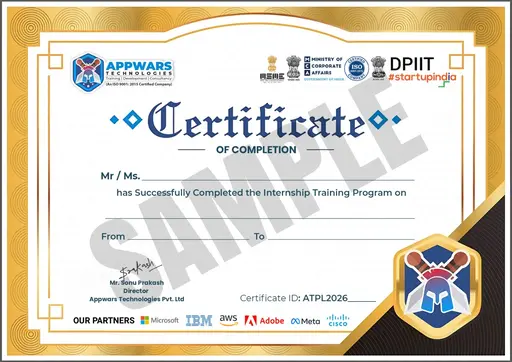
    3. Will I receive a certificate after completing the course?

    Yes, upon successful completion of the training program, you will receive an industry-recognized Machine Learning certification from Appwars Technologies, which can boost your resume and job prospects.

    4. Does Appwars Technologies provide placement assistance after the course?

    Yes, we offer 100% placement assistance, including resume building, interview preparation, mock interviews, and connections with hiring partners in top tech companies across Noida and India.

    5. Is this Machine Learning training suitable for beginners and working professionals?

    Absolutely! Our training is designed for students, freshers, and working professionals. We offer flexible batch timings, hands-on projects, and expert mentorship to suit different learning needs and schedules.

    Related Courses

    data-science

    Data Science

    robotics

    Robotics

    power-bi

    Power BI Training

    excel

    Advance Excel

    5/5 - (134 votes)
    Fill the Form Below

    Get a flat. 15% Off on All Courses